
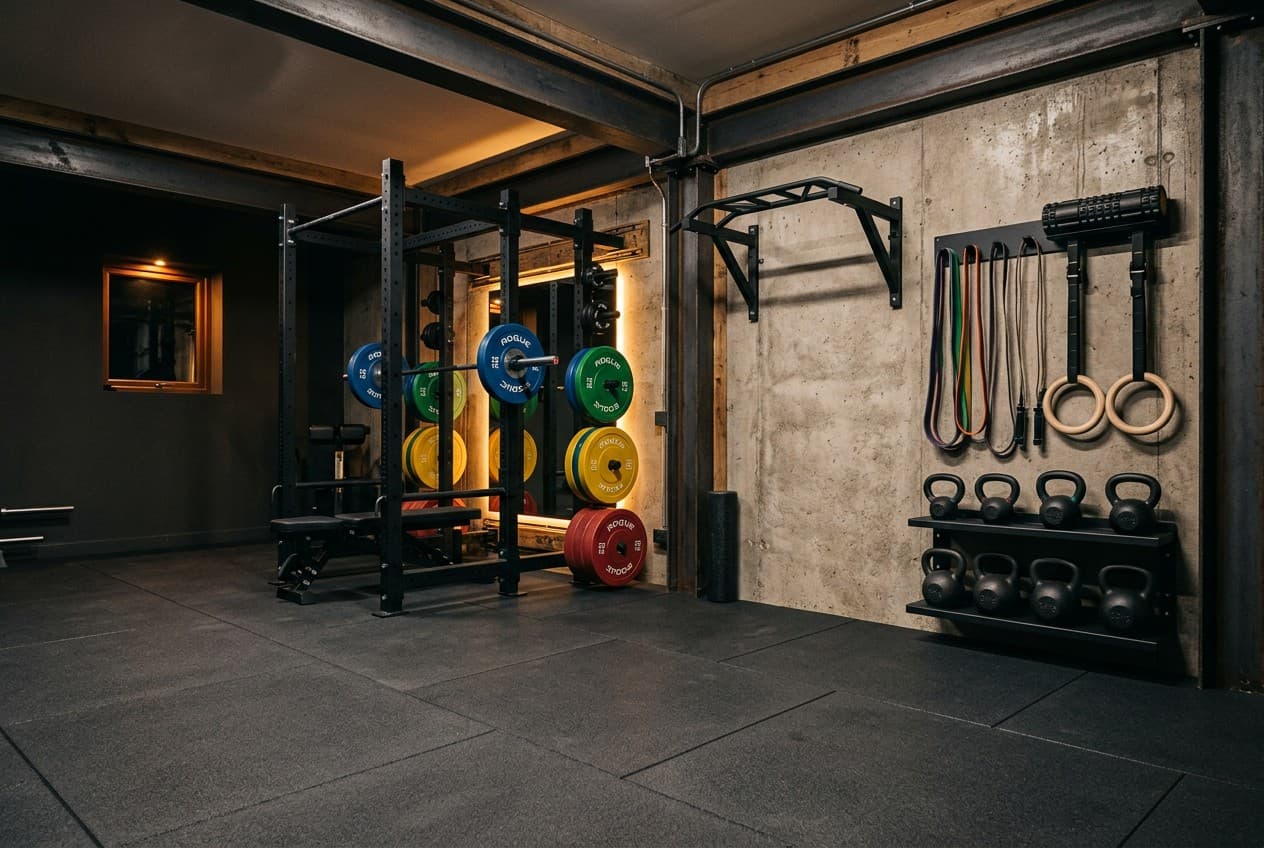
Why Gym Flooring Matters More Than Most People Think
Garage gym flooring is usually the last thing people buy and the first thing they regret not doing properly. The concrete floor feels fine for the first few months — then you drop a weight, the concrete chips, your knees start hurting from hours of standing, and the noise complaints from the rest of the house start.
There are five viable flooring options for a garage gym. They differ significantly in cost, durability, comfort, and how well they handle the specific demands of different training styles.
The biggest mistake: buying foam interlocking tiles from a big-box store because they're cheap. Foam compresses under heavy loads, creates instability during pressing movements, and degrades quickly under rubber-soled shoes. It's the wrong material for lifting. It's fine for yoga or stretching — but if barbell training is in your future, get the right floor from the start.
The Five Options — Compared
| Option | Cost/Sq FtRecommended | Thickness | Lifting-Safe | Noise Reduction | Best For |
|---|---|---|---|---|---|
| Foam Tiles (EVA) | $0.50–$1.50 | 1/2–1 in | No — compresses | Moderate | Yoga, stretching, light cardio only |
| Rubber Tiles (Interlocking) | $1.50–$3.50 | 3/4–1 in | Yes | Good | Most garage gyms — best all-round |
| Rubber Rolls | $1.20–$2.50 | 3/8–3/4 in | Yes (thicker rolls) | Good | Larger spaces — fewer seams |
| Stall Mats (Horse Mats) | $1.50–$2.00 | 3/4 in | Yes — extremely durable | Excellent | Heavy lifting, budget-conscious |
| Luxury Vinyl (LVP) | $2–$5 | 5–8 mm | Yes for light use | Low | Cardio-focused gyms, aesthetics priority |
Option 1: Foam Tiles (EVA)
The foam interlocking tiles you see at big-box stores (often in primary colours) are EVA foam — lightweight, cheap, and easy to install. They're the right choice for yoga studios, martial arts, and light stretching areas.
They are not suitable for barbell training. Under a loaded barbell (200+ lbs), foam compresses and creates an unstable surface. This is a genuine safety issue: during heavy squats or overhead press, a shifting floor creates unexpected movement at the feet. The foam also dents permanently under the feet of power racks and other heavy equipment.
Use foam tiles for: a designated stretching/warmup zone, a separate yoga mat area, or kids' play areas in a multipurpose garage.
Don't use them for: under a rack, for deadlifts, or anywhere heavy equipment will sit permanently.
Option 2: Rubber Tiles (Interlocking)
3/4-inch interlocking rubber tiles are the standard for good reason. They're dense enough to withstand heavy loads, thick enough to protect the floor from dropped weights (and protect weights from concrete impact), and easy enough to install that a full one-car garage takes a few hours.
The key spec is density, not thickness alone. Look for virgin rubber tiles or recycled rubber tiles with a density of at least 40 lbs/cu ft. Cheap imports from unknown manufacturers often use filler material that reduces density and lifespan.
Installation: snap tiles together dry (no adhesive) for most installations. Use a rubber-to-concrete adhesive at the perimeter if the tiles shift on polished concrete.
Where to buy: Rubber Flooring Inc, Greatmats, and Horse Stall Mats Direct all offer quality options in the $1.50–$3.50/sq ft range. Avoid dollar-store quality alternatives — the difference in density is immediate when you lift them.
Rubber Tiles — The Standard Option
- ✓Dense and stable under heavy barbell loads
- ✓Easy DIY installation — no adhesive required in most cases
- ✓Repairable — replace individual tiles if damaged
- ✓Good shock absorption and noise reduction
- ✓Multiple thickness options (3/8 in for cardio zones, 3/4 in for lifting zones)
- ✗Higher upfront cost than foam or mats
- ✗Heavy — a full pallet is 2,000+ lbs
- ✗Rubber odor when new (dissipates in 1–4 weeks with ventilation)
- ✗Seams can collect chalk, rubber dust, and debris
- ✗Quality varies significantly between manufacturers
Option 3: Rubber Rolls
Rubber rolls are the same material as rubber tiles but come in 4-foot-wide rolls (typically 25–50 ft long). Fewer seams = easier cleaning and a cleaner look, but harder to install alone and impossible to repair an individual section if it damages.
Best for: larger spaces (2-car garages and above) where rolling out the material is practical, and for people who want a seamless-looking floor.
Thickness matters more here: 3/8 in rolls are suitable for cardio areas and light lifting. For power racks and heavy deadlifting, go with 3/4 in rolls.
Option 4: Stall Mats (Horse Mats)
Farm supply store stall mats are the budget cheat code for garage gym flooring. They're the same type of dense rubber used in horse stalls — extremely heavy, extremely durable, and significantly cheaper than specialty gym tiles.
A 4×6 ft stall mat at 3/4 inch thickness weighs 100 lbs and costs $40–$60 at Tractor Supply or Rural King. For a one-car garage, you need about 8–10 mats ($400–$600 total). That's substantially cheaper than rubber tile systems for the same coverage.
The trade-offs:
- Heavy (100 lbs each) — you'll need help laying them
- Strong rubber smell for 4–6 weeks (more persistent than tiles)
- Edges don't interlock — gaps at seams, slight movement without perimeter anchoring
- Sizes are fixed (4×6) so you'll need to cut mats for irregular spaces
For most budget-conscious garage gyms, stall mats are the best value-per-dollar option in the flooring category.
Stall Mats — Best Budget Option
- ✓Dramatically cheaper than specialty gym tiles ($40–$60 per mat vs $150+ for equivalent gym tile area)
- ✓Extremely durable — made to withstand horses, handles barbells easily
- ✓3/4 inch density is correct for heavy lifting
- ✓Available at farm supply stores nationwide — next-day availability
- ✓Can be cut with a utility knife to fit irregular spaces
- ✗Very heavy — 100 lbs per mat. Two-person installation required
- ✗Strong rubber odor for 4–8 weeks in enclosed spaces
- ✗Edges don't interlock — slight movement without securing
- ✗4×6 sizing requires cutting for most garages
- ✗Aesthetic is less polished than interlocking tiles
Option 5: Luxury Vinyl (LVP)
Luxury vinyl plank flooring works well in a gym that's primarily cardio-focused or multipurpose (gym + home office, gym + laundry). LVP is warm underfoot, quiet, and looks like a finished room rather than a traditional gym.
The limitation: LVP is not the right surface for heavy barbell work. Dropped weights can crack or gouge vinyl planks, and the thinner material offers less protection to the concrete underneath.
Best use in a garage gym: as the floor in a dedicated cardio area (treadmill, bike, rower) or as the base under a rubber mat zone for lifting. Don't use it as the sole floor material under a power rack.
Cost Per Square Foot — Compared
Garage Gym Flooring — Approximate Cost per Sq Ft
Frequently Asked Questions
Do I need to cover the entire garage floor?
For a lifting-focused gym, cover at minimum: under the rack + 3 ft in front of it for walking out weights, and the entire deadlift area. For a cardio-focused gym, full coverage is less critical. For a gym you train in daily, covering the entire floor avoids the constant problem of tiles/mats shifting and creating gaps.
How thick should garage gym flooring be?
3/4 inch for any area with a power rack, deadlift area, or heavy equipment. 3/8 inch is acceptable for cardio zones and stretching areas. Do not use anything under 3/8 inch for barbell training.
Can I put rubber flooring over existing concrete?
Yes. Clean and dry concrete is the ideal base for rubber tiles, rolls, and stall mats. Sweep and degrease before installation. Slight imperfections in the concrete are acceptable — rubber flooring is forgiving.
Will rubber flooring damage my concrete?
No. Rubber flooring protects concrete from the weight and impact of dropped weights. The concrete is safer with rubber on top than without it.
Related Guides
- Garage Gym Ideas: 1-Car and 2-Car Layouts — full gym setup and zone planning
- Garage Gym Setup on a Budget — how to prioritize when every dollar counts
- Garage Gym Hub: Complete Guide — the full planning resource
Use the AI Garage Designer to plan your garage gym layout — including flooring coverage, zone planning, and equipment placement recommendations.