
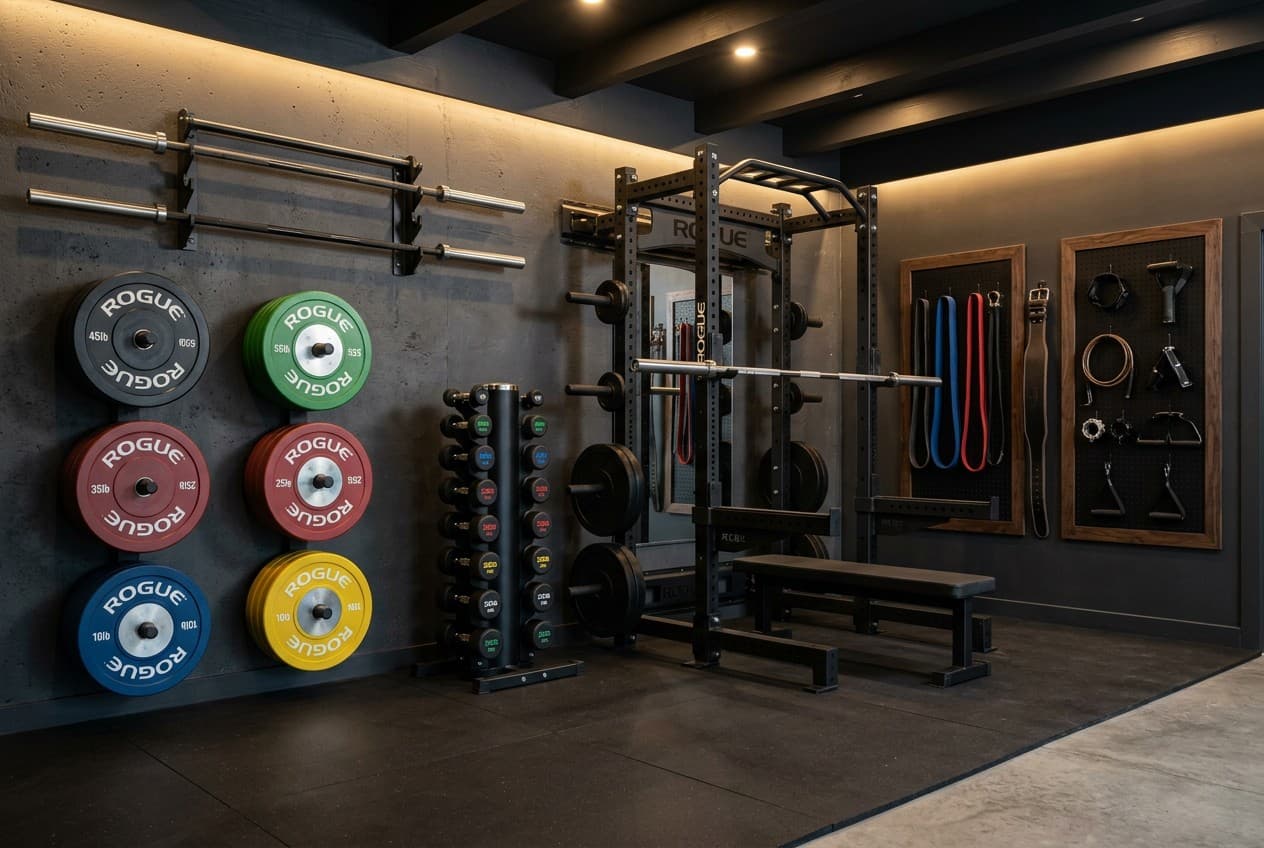
Storage Is the Difference Between a Gym That Gets Used and One That Doesn't
A garage gym with equipment scattered on the floor, plates stacked against the wall, and dumbbells wherever they last landed is a gym you navigate around, not a gym you train in. The friction of locating and setting up equipment before each session is a real barrier to training — small, but cumulative.
Good gym storage removes that friction. Everything has a specific location. Setup time drops to under a minute. The floor stays clear. The gym gets used.
This guide covers storage solutions for each equipment category, with zone planning to fit them together in a real garage space.
Minimal / Half-Garage Setup
For gyms that share space with a vehicle or workbench. All gear is pushed to the walls in a linear perimeter layout, keeping the centre clear as a "hybrid lane" for deadlifts, floor work, or car access.
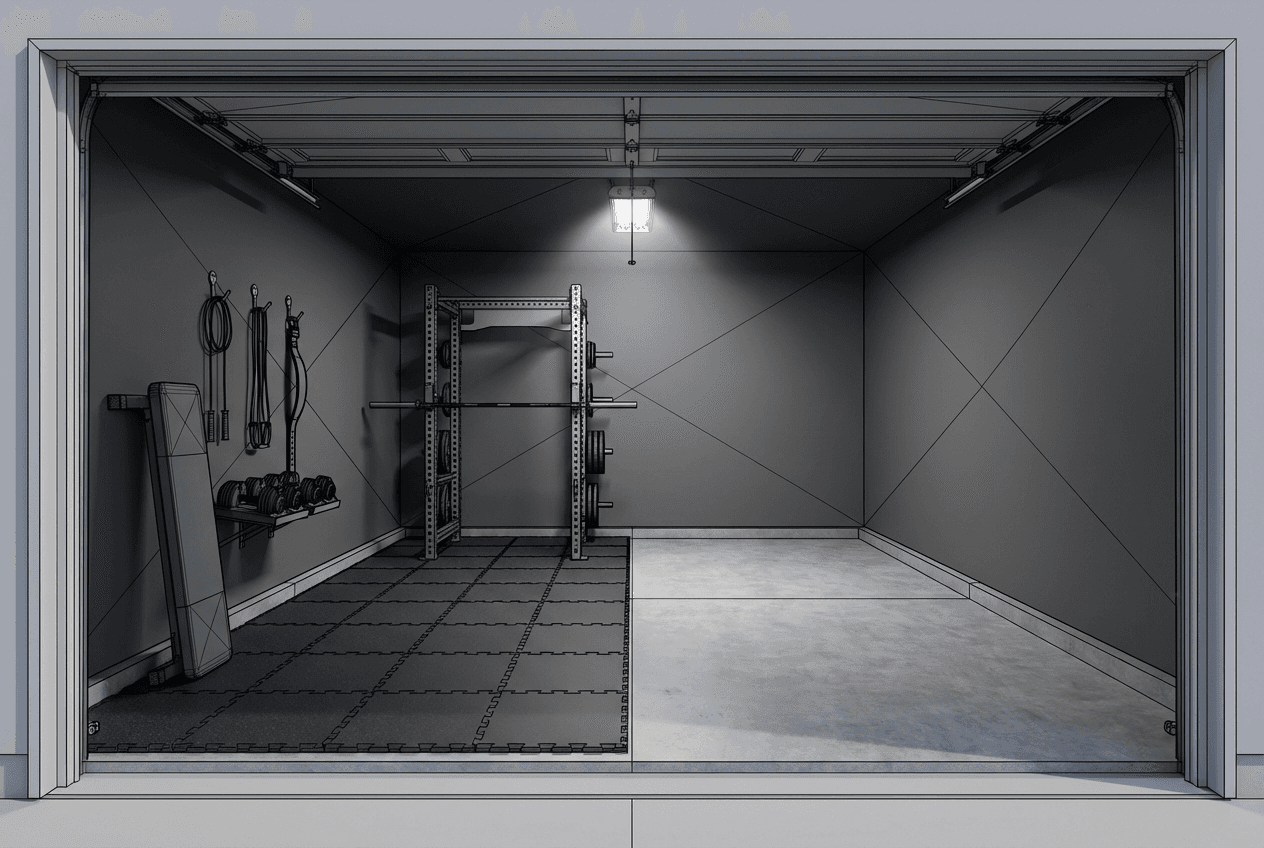
Minimal Storage — Half-Garage Gym (~120 sq ft gym zone)
Total: 12×20 ft (one bay of a 2-car garage)Why this works: Rack-integrated plate storage eliminates the need for a separate plate tree (saves 2×2 ft of floor). A vertical bench stores in 2 sq ft. Adjustable dumbbells replace a full rack. Total storage footprint: under 30 sq ft.
Wall-Dominant System
For dedicated gym spaces where every square foot of floor should be available for training. All storage is wall-mounted — zero freestanding units. The floor stays completely clear.
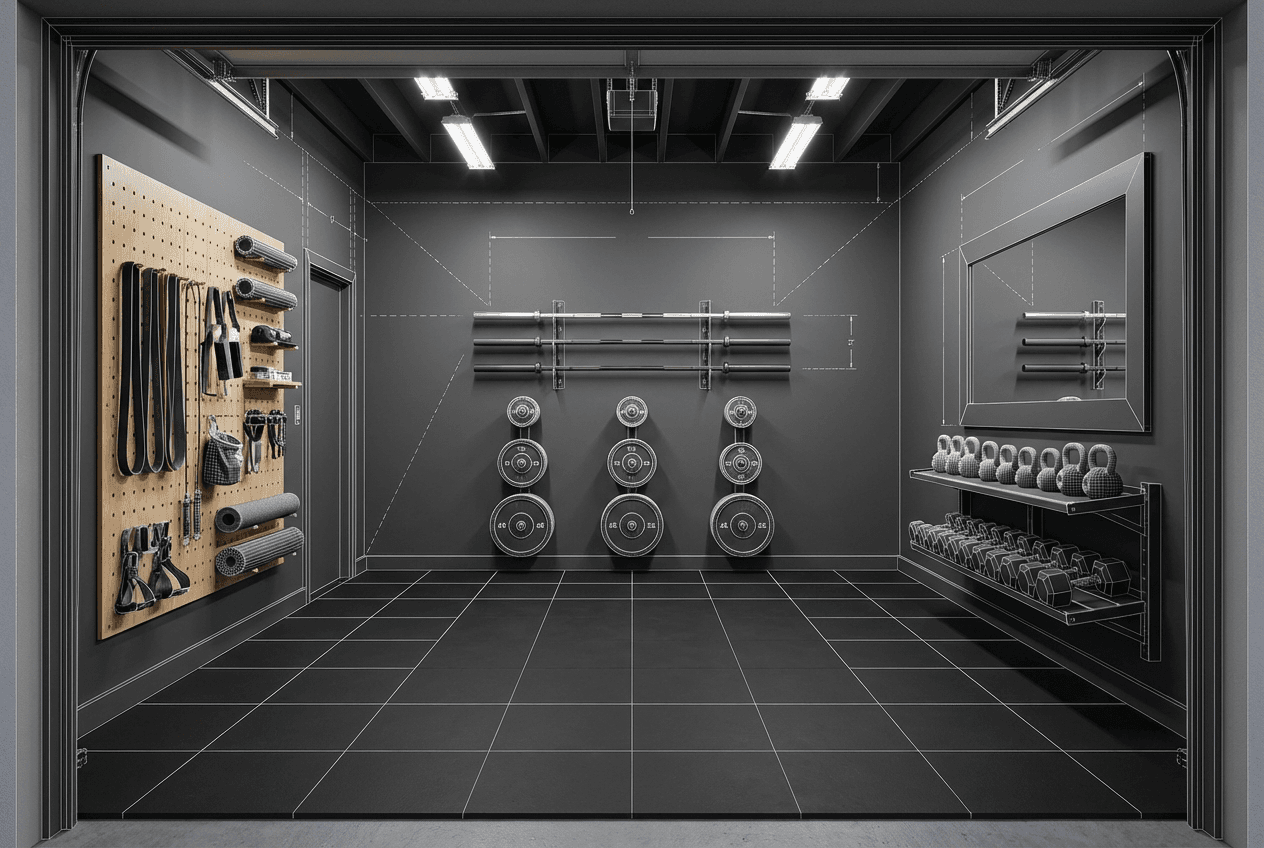
Wall-Dominant Storage — Dedicated Gym (~200 sq ft)
Total: 12×20 ft (full 1-car garage)Why this works: Floor stays 100% clear for lifting, conditioning, and movement. All storage is visible (nothing hidden in bins). Wall-mounted systems distribute weight into studs — far more capacity than freestanding racks in the same footprint.
Complete Integrated System
For full-size gyms (2-car garage or larger) with a complete equipment collection. Combines freestanding racks, wall systems, and dedicated zones for every equipment category.
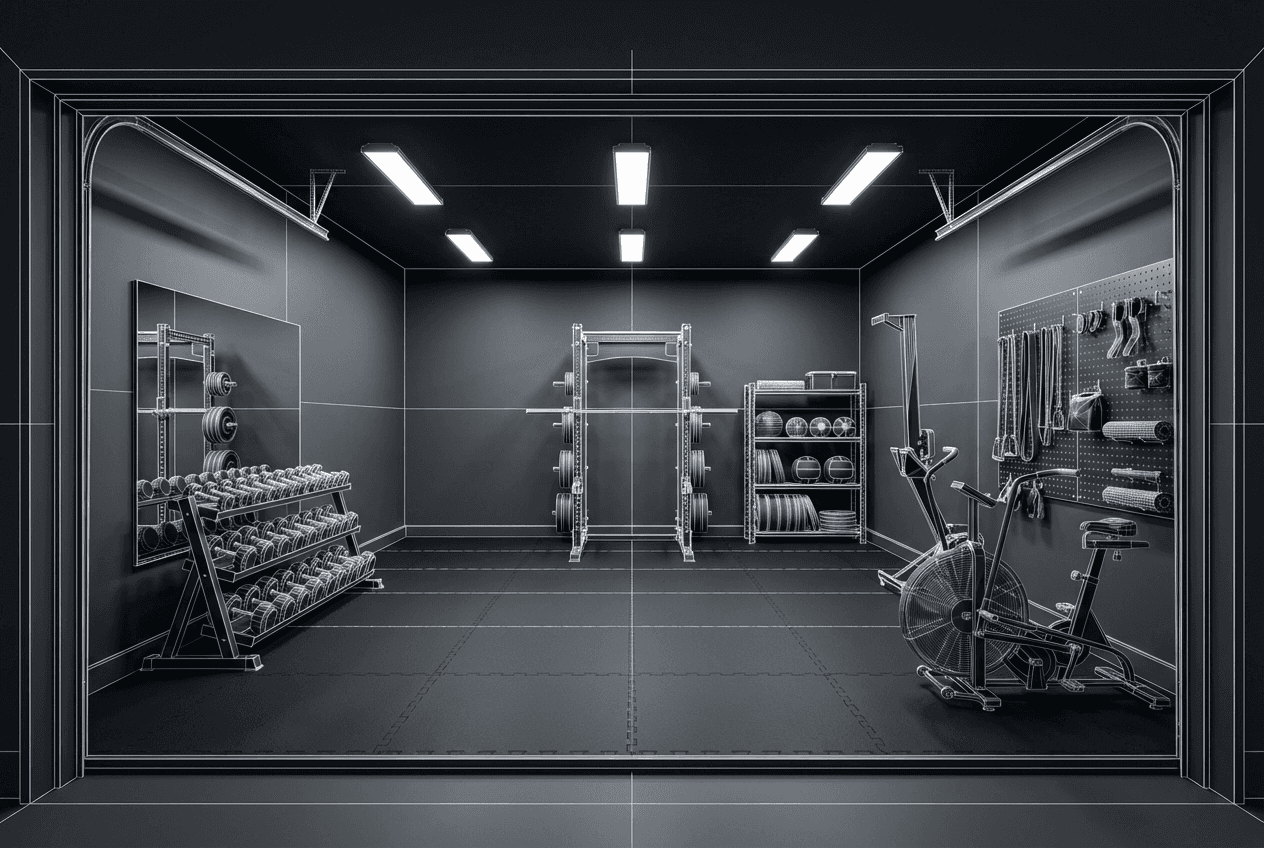
Complete Integrated Storage — Full Gym (~300+ sq ft)
Total: 20×22 ft (2-car garage)Storage by Equipment Type
Garage Gym Storage — System by Equipment Type
| Tool / Item | Use | Est. Cost | Priority |
|---|---|---|---|
| Olympic weight plates | Vertical plate tree (freestanding) next to the rack, or horizontal pegs on a wall-mounted storage unit. A 300 lb plate set on a quality plate tree keeps plates organised and accessible. | $50–$200 | Essential |
| Olympic barbell | Horizontal wall-mounted barbell hooks (2 hooks per bar) at 6 ft height. Keeps bars off the floor, prevents roll damage. 2 hooks = ~$15–$30. | $15–$60 | Essential |
| Adjustable dumbbells | On their own stand (included or sold separately). Position near a mirror. A dedicated cradle keeps them from rolling and protects the floor. | $30–$100 | Essential |
| Fixed dumbbells (set) | A-frame dumbbell rack — tiered, 3 levels, holds 5–50 lb range. Horizontal rack is compact but limits quick access. A-frame is the standard for home gyms. | $100–$400 | Essential |
| Resistance bands | Pegboard hooks or S-hooks on a wall-mounted bar. Keep sorted by resistance — colour-coding is the most practical approach. | $20–$50 | Recommended |
| Jump rope and accessories | Hook above the cardio zone or on a pegboard panel. A hook at eye level prevents the rope from getting tangled under equipment. | $5–$20 | Recommended |
| Foam rollers, yoga mats | Vertical wall hooks or a dedicated floor bin. Foam rollers stand vertically; yoga mats roll and hang from two hooks. | $15–$40 | Recommended |
| Kettlebells | A dedicated kettlebell shelf (solid steel, rated for heavy loads) mounted at waist height, or a floor-level kettlebell rack. Do not store on standard wire shelving — point loading damages wire shelves. | $60–$200 | Recommended |
| Pull-up bar / gymnastics rings | Ceiling-mounted pull-up rig or rack attachment. Gymnastics rings on ceiling hooks. Keep ceiling clear of storage hooks in the pulling zone. | $50–$300 | Optional |
| Medicine balls / slam balls | Wall-mounted ball rack or a large open floor bin. Heavy balls don't stack safely — dedicated slots or a bin prevents rolling. | $40–$120 | Optional |
Wall Storage Systems Compared
| System | Cost | FlexibilityRecommended | Weight Capacity | Best For |
|---|---|---|---|---|
| Pegboard (standard 1/4-in) | $30–$80 per 4×8 panel | High — hooks reposition freely | 20–30 lbs per hook | Accessories, light tools, bands — not heavy equipment |
| Slatwall panels | $60–$150 per 4×8 panel | High — brackets slide along slots | 50–100 lbs per bracket | Mixed storage zones; accepts hooks, shelves, bins |
| French cleat (DIY) | $20–$50 per 8 ft run | High — any custom bracket works | 100+ lbs per cleat run | Heavy items: barbell hooks, plate storage, kettlebell shelves |
| Freestanding shelving (metal) | $80–$200 per unit | Low — fixed shelf positions | 200–500 lbs per shelf | Heavy, uniform items: weight plates, storage bins |
| Plate storage tree (freestanding) | $50–$200 | None — dedicated use | 300–1,000 lbs | Olympic plates specifically — most efficient use of space for plates |
Floor Space Rules
The storage decisions that protect usable training space:
-
Nothing lives on the floor permanently. Every item left on the floor becomes a permanent obstacle. Plates on the floor adjacent to the rack are acceptable during a session; they return to the tree after.
-
The area inside the rack is not storage. The space between the uprights of a power rack should be clear at all times. Storing plates or dumbbells inside the rack creates a tripping hazard during any lift.
-
Folding equipment earns its floor position. A Concept2 rower that folds stores vertically against the wall in under 30 seconds. An assault bike does not fold — plan a fixed footprint. Fold-flat equipment is worth a small premium in a garage gym specifically for this reason.
-
The path from the door to the rack stays clear. A 36-inch-wide clear path from the garage entry to the primary lifting zone. Storage that encroaches on this path is storage you'll eventually resent.
Related Guides
- Garage Gym Ideas: 1-Car and 2-Car Layouts — full zone planning before storage decisions
- Garage Gym Flooring Guide — floor choices that work with plate drops and equipment weight
- Garage Gym Hub: Complete Guide — the full planning resource
Use the AI Garage Designer to plan your garage gym storage layout — equipment placement, wall storage zones, and floor plan optimised for your specific garage dimensions.