
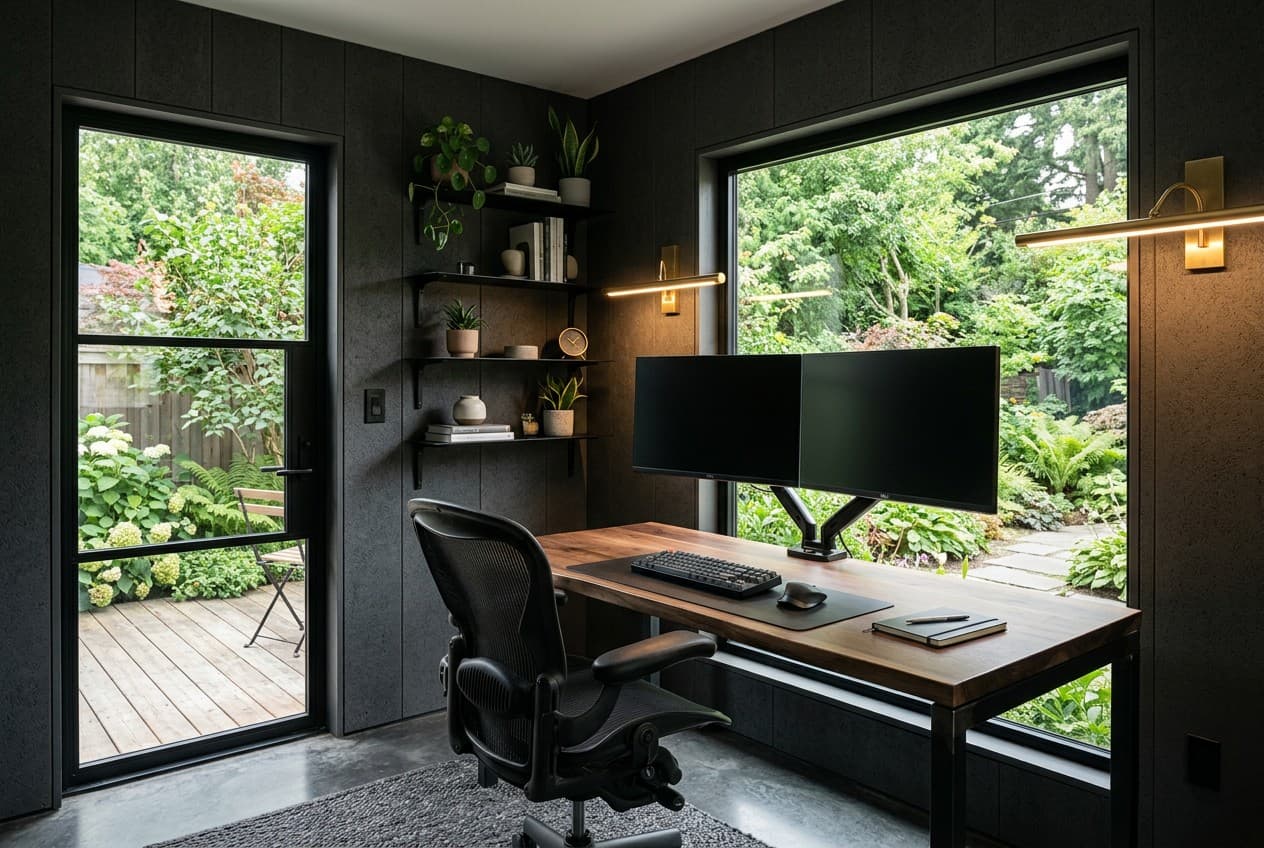
Why People Build Shed Offices — and Why Some Don't Work
The pitch is simple: a separate structure in the backyard gives you a dedicated workspace away from the house. No commute. No open-plan office noise. A space that's work-only when you're in it.
The reality is more complicated. Shed offices that work well have three things in common: they're properly insulated (not just functional in mild weather), they have real connectivity (not just WiFi that barely reaches from the house), and they were planned around a specific work style rather than just furnished with leftover house items.
Shed offices that don't work: they're either too cold in winter to use consistently, internet is unreliable, or the layout creates friction every time you try to work seriously. If the office doesn't function like an office, it reverts to storage within a year.
This guide gives you layouts, budget tiers, and the planning framework that separates functional from aspirational.
The Three Shed Office Types
Most shed office setups fall into one of three categories based on primary use:
- Focused single-person office — one desk, one person, maximum quiet and efficiency
- Dual-purpose space — office + hobby room, or office + guest space (daybed/couch)
- Studio-office — creative work, content creation, or client meetings in addition to standard desk work
The right layout depends entirely on which type you're building. Don't try to design for all three.
Layout Plans
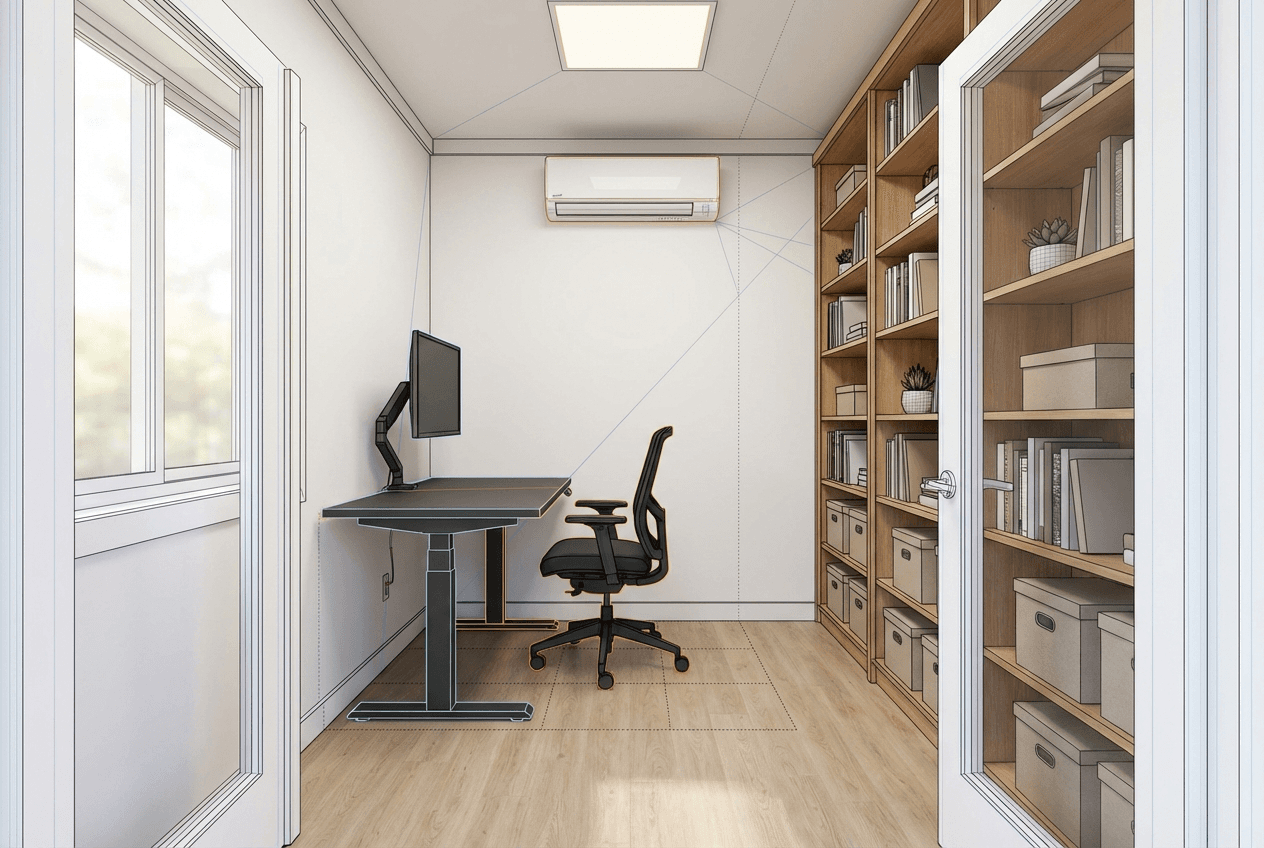
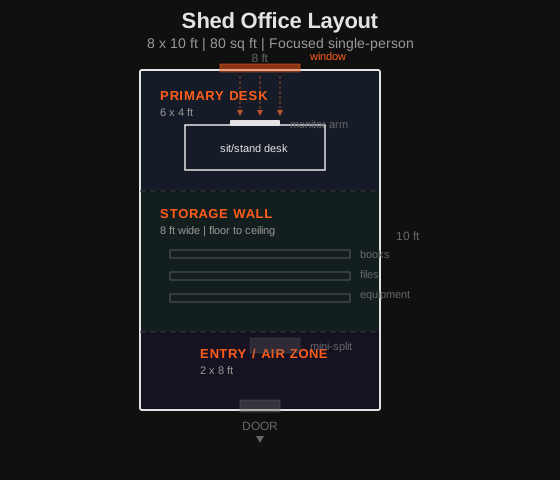
Layout 1: Focused Single-Person Office (8×10 ft)
Total: 80 sq ftWho this works for: solo remote workers doing calls, writing, coding, admin. Maximum focus with minimum distraction. Works in an 8×10 shed with a standard-height ceiling.
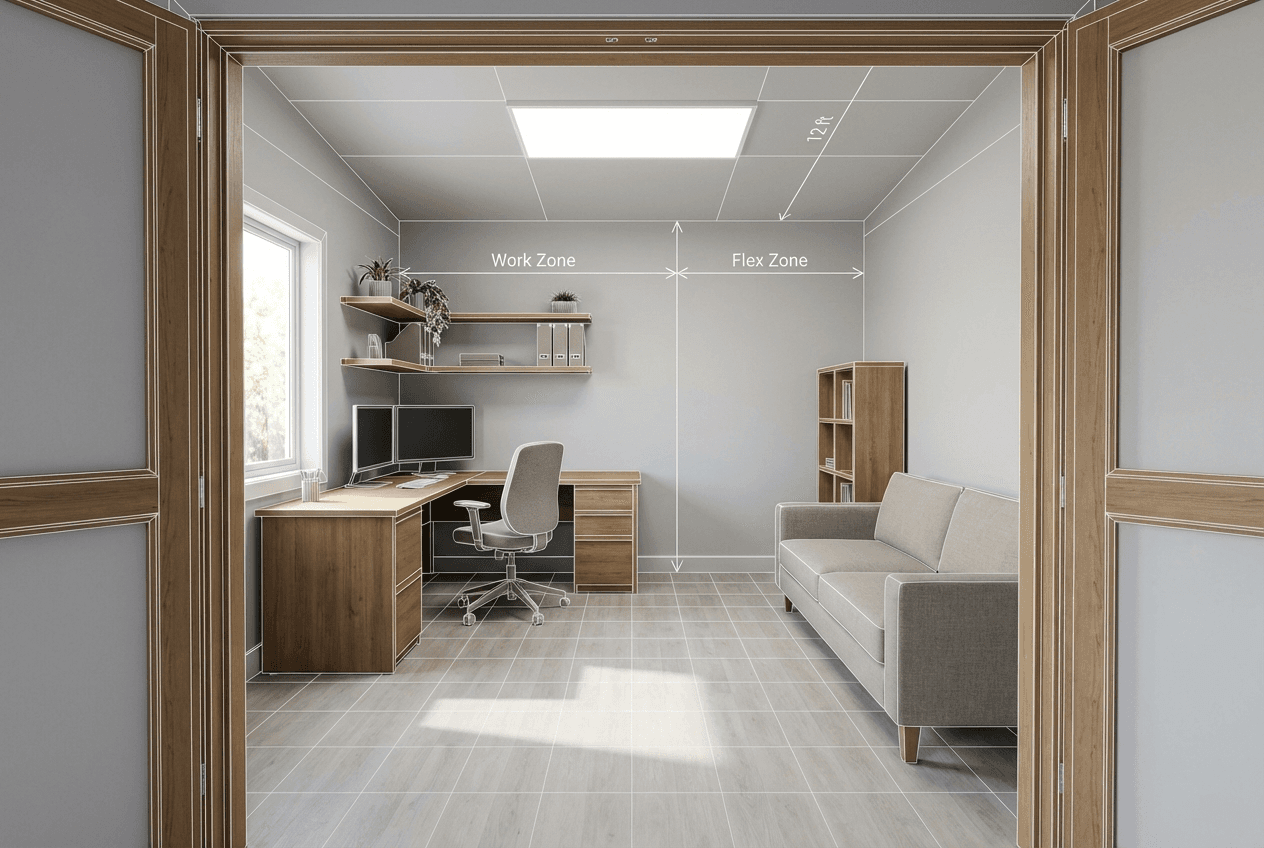
Layout 2: Dual-Purpose Office/Room (10×12 ft)
Total: 120 sq ftWho this works for: remote workers who need occasional meeting space, freelancers who see clients, or those who want to combine work and quiet hobbying (reading, journaling, craft work that doesn't create mess).
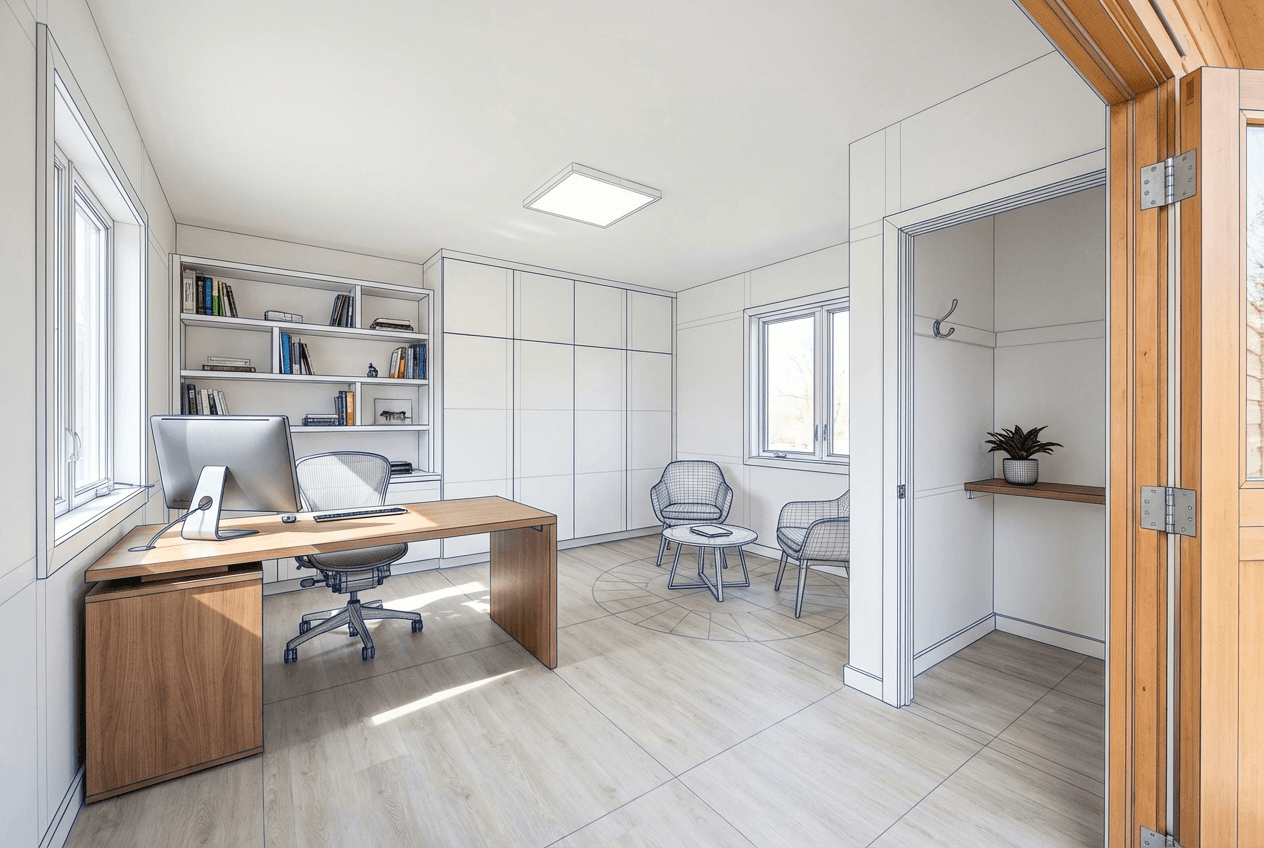
Layout 3: Studio-Office (12×16 ft)
Total: 192 sq ftWho this works for: content creators, coaches, consultants, or anyone whose work includes video or audio production. This is a purpose-built studio-workspace, not just an office.
What Makes a Shed Office Actually Function
Insulation
A shed without insulation is seasonal at best. In most climates, an uninsulated shed is unusable in winter and miserable in summer. The minimum viable insulation spec:
- Walls: R-13 (3.5-inch fiberglass batts between 2×4 framing)
- Ceiling: R-19 or R-30 (depends on climate zone)
- Floor: R-11 if elevated; if on-grade concrete, rigid foam under a floating floor
Total cost for a basic 10×12 shed: $200–$600 in materials. Without this, your HVAC equipment works harder, your energy bills are higher, and the space is uncomfortable on any temperature extreme.
See How to Make a Shed Livable for the full insulation and habitability guide.
Connectivity
WiFi that barely reaches from the house is not reliable enough for daily work. Options in order of reliability:
- Ethernet run from house — best performance, requires trenching or overhead cable run, one-time cost ($200–$500 DIY). Absolute standard if you do video calls daily.
- MoCA adapter + coaxial cable — if existing coax runs to the shed (common), MoCA converts it to high-speed ethernet. No trenching required.
- Point-to-point wireless bridge — connects two units line-of-sight. Good option for sheds too far to trench. Requires clear sightline between house and shed.
- WiFi extender — worst option for professional use. Acceptable for light browsing only.
Electrical
A dedicated circuit from your home's breaker panel is the right solution for a working shed office. A single 20A circuit handles a computer, monitor, lighting, and phone charging comfortably. Add a second circuit if you want HVAC on a dedicated circuit (recommended).
This is a licensed electrician job in most jurisdictions: $500–$1,500 depending on distance and panel capacity.
Budget Tiers
Shed Office Budget Tiers
- Convert an existing shed: insulation, electrical, desk
- Basic WiFi or ethernet extension from house
- Portable AC + electric heater (not ideal — seasonal)
- IKEA or second-hand furniture
- Trade-off: comfort varies with weather; HVAC not ideal
- Pre-built shed office kit (or new framed shed)
- Mini-split HVAC ($800–$2,000 installed)
- Proper insulation + vapour barrier
- Ethernet run from house
- Quality desk and ergonomic chair
- Custom-built structure with planning permission
- Full electrical sub-panel
- Full insulation + real interior finish (drywall, flooring)
- Separate HVAC with thermostat control
- Built-in storage and built-in desk/shelving
Frequently Asked Questions
Do I need planning permission for a shed office?
In most US jurisdictions: no, for a structure under 200 sq ft that isn't permanently attached to the house. Rules vary significantly by state and municipality. Check your local zoning ordinance before purchasing or building. Many require that the structure is not used as a permanent residence.
How do I handle condensation in a shed office?
Condensation (moisture on walls and windows) is a sign that your insulation or vapour barrier is inadequate. The fix: improve insulation, add a vapour retarder on the warm side of the insulation, and ensure the space is heated (not just when you're in it — cold periods allow moisture to accumulate). A small dehumidifier helps during transition seasons.
Can I use a shed office for client meetings?
Yes — with the right layout. A 10×12 or larger space with a seating area works well for 1:1 meetings. For more formal or larger groups, consider the studio-office layout above. Ensure good lighting, a clean professional backdrop for video calls, and basic soundproofing (heavy curtains, a rug) if the area is noisy.
Related Guides
- Best Backyard Office Sheds — comparing prefab options before you buy
- How to Make a Shed Livable — insulation, electrical, and habitability
- Convert a Shed to an Office — step-by-step conversion guide
- Shed Office Hub: Complete Guide — the full planning resource
Use the AI Garage Designer to plan your shed office layout — including desk placement, storage configuration, and space for your specific work setup.