
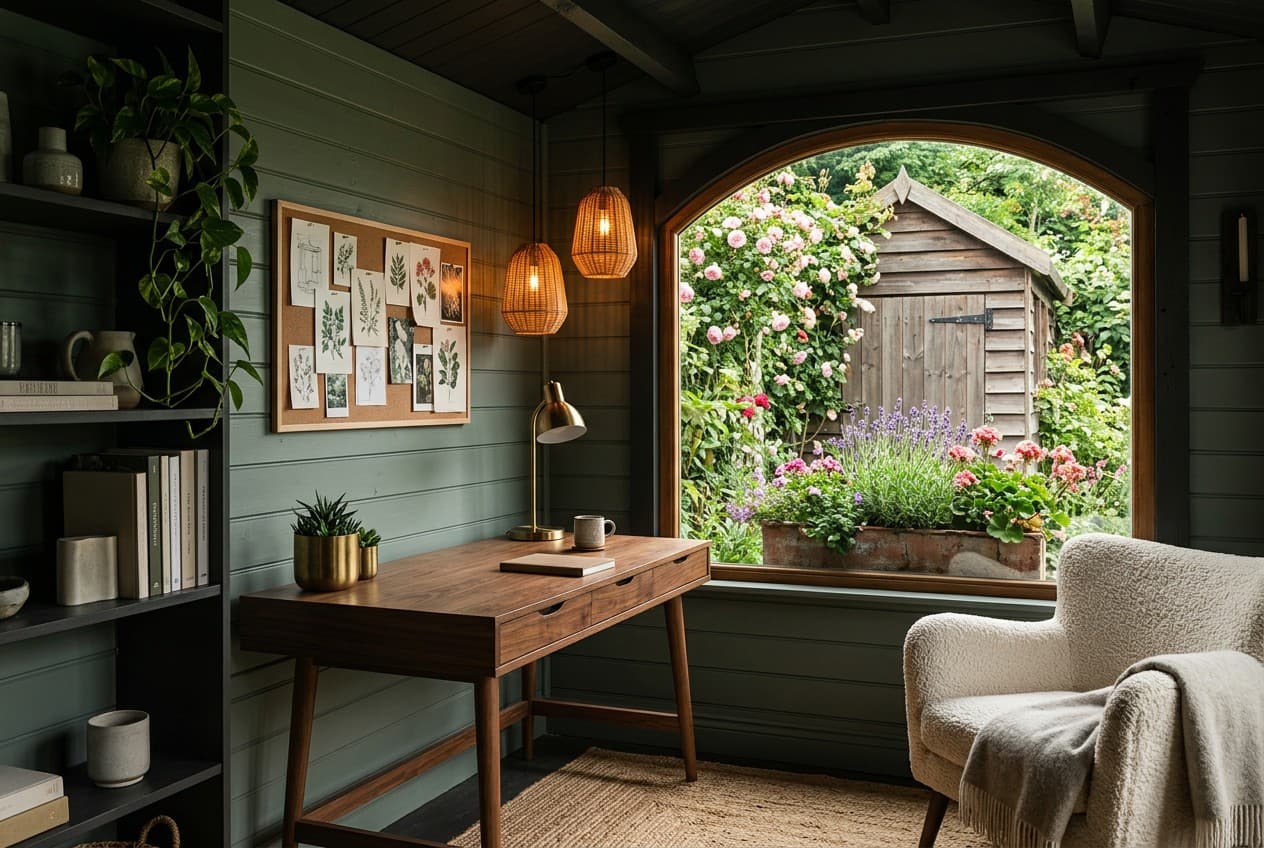
The Difference Between a Shed Office and a She Shed Office
The functional requirements are the same: insulation, proper electrical, real connectivity, a desk that works. The difference is in the intent.
A she shed office is a space that's completely yours — not a shared home office, not a converted corner of the bedroom, not a space that gets reclaimed when guests arrive. It's designed around how you work and what you need to feel comfortable, focused, and separate from the rest of the house.
This guide covers the three main layout types, the dimensions that determine whether a space is actually functional vs just pretty, and three budget tiers that reflect realistic build costs.
Three Layout Types
Layout 1: Dedicated Office (Single Purpose)
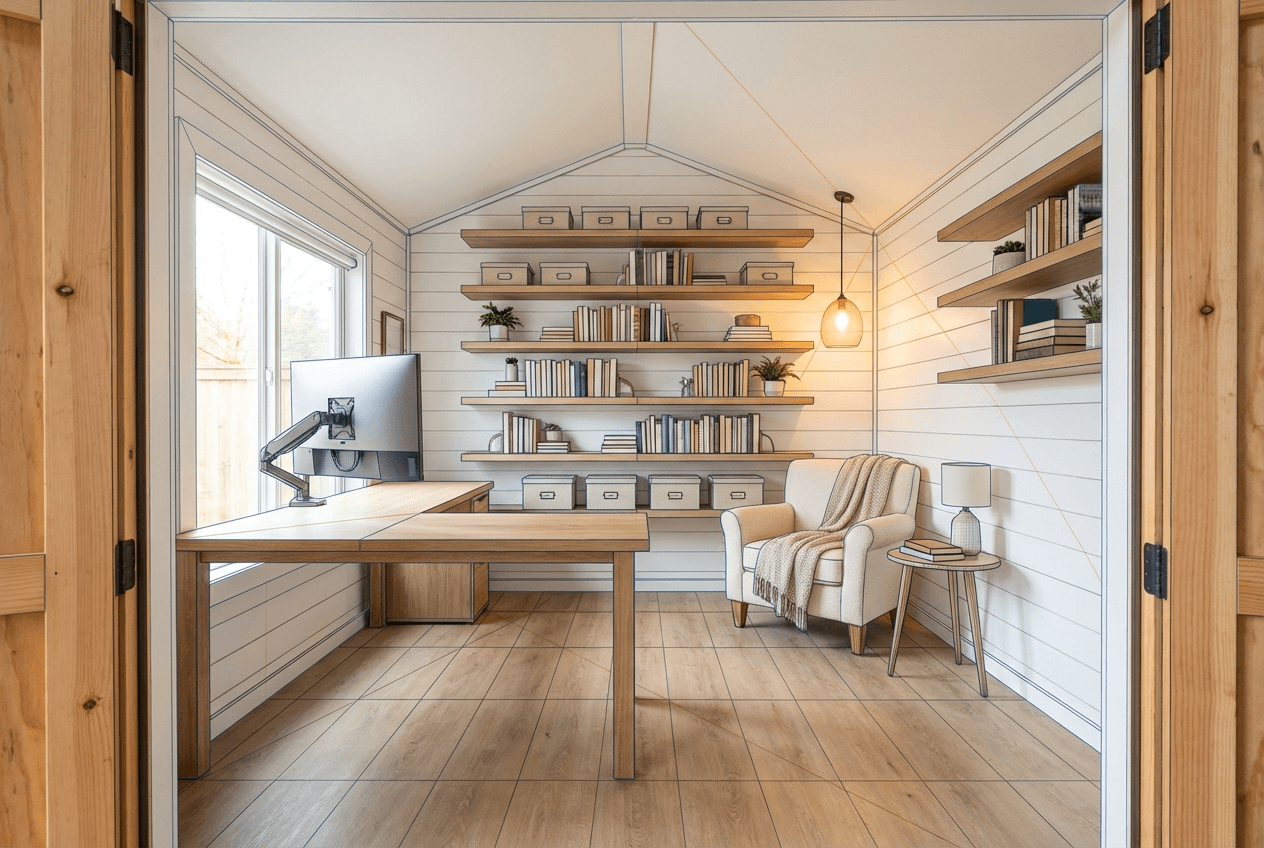
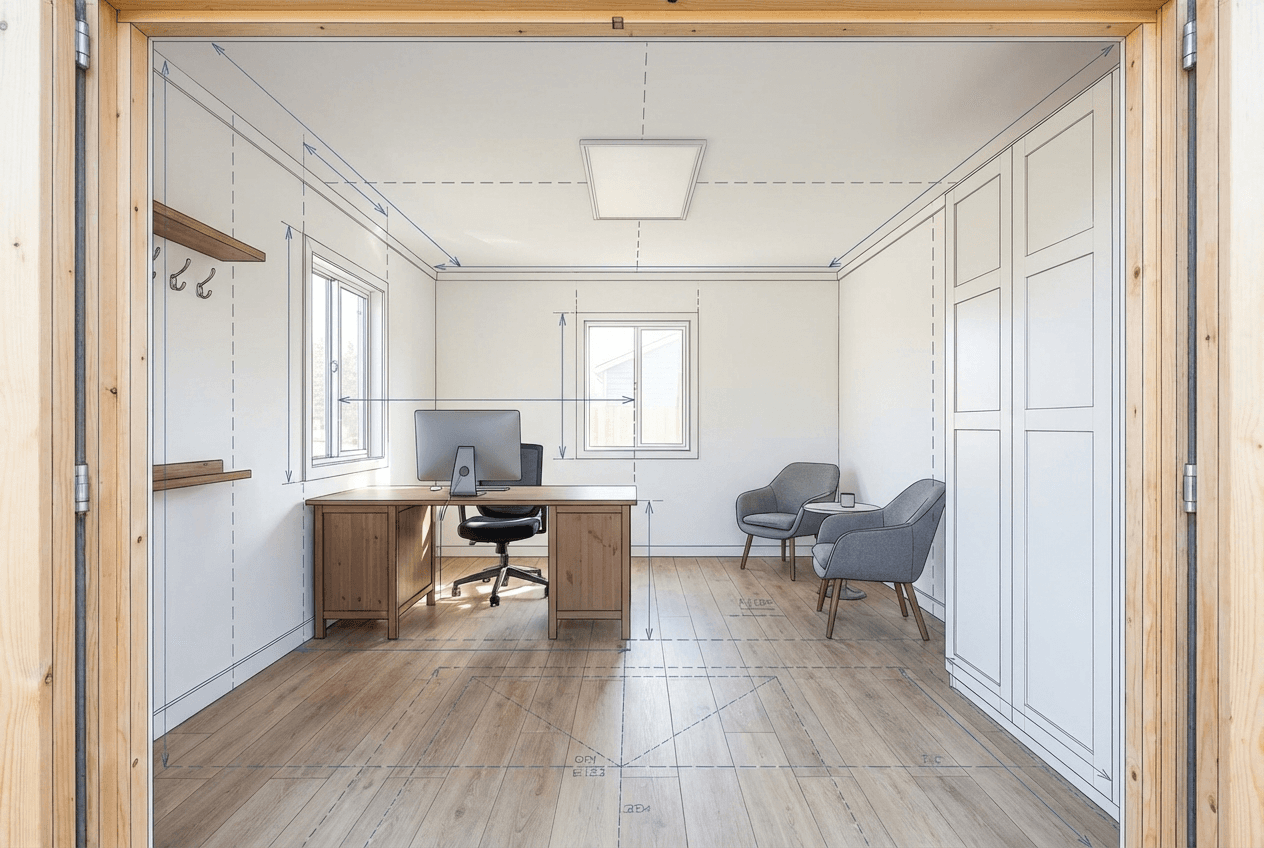
This is the most functional layout — the entire space is optimized for work. It scales down to an 8×10 shed and up to a 12×16 structure.
Dedicated Office Layout (10×12 ft)
Total: 120 sq ft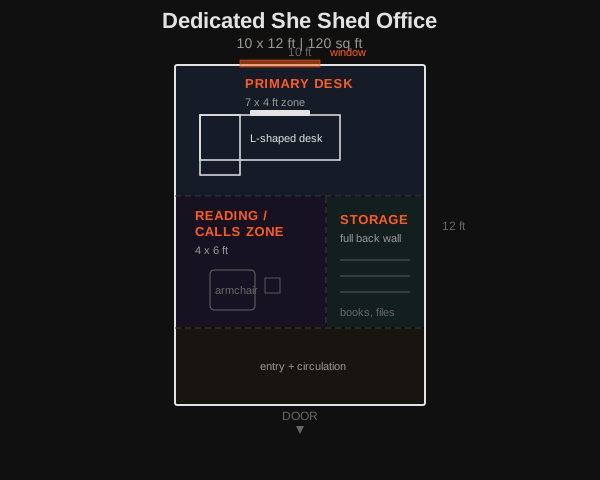
What makes it work: The separation of screen-work (desk) and reading/call work (chair) mirrors how you naturally shift during a workday. If your she shed has only a desk, you'll end up sitting in one position all day, which is exactly what you were trying to escape from working at home.
Layout 2: Craft-Office Combo
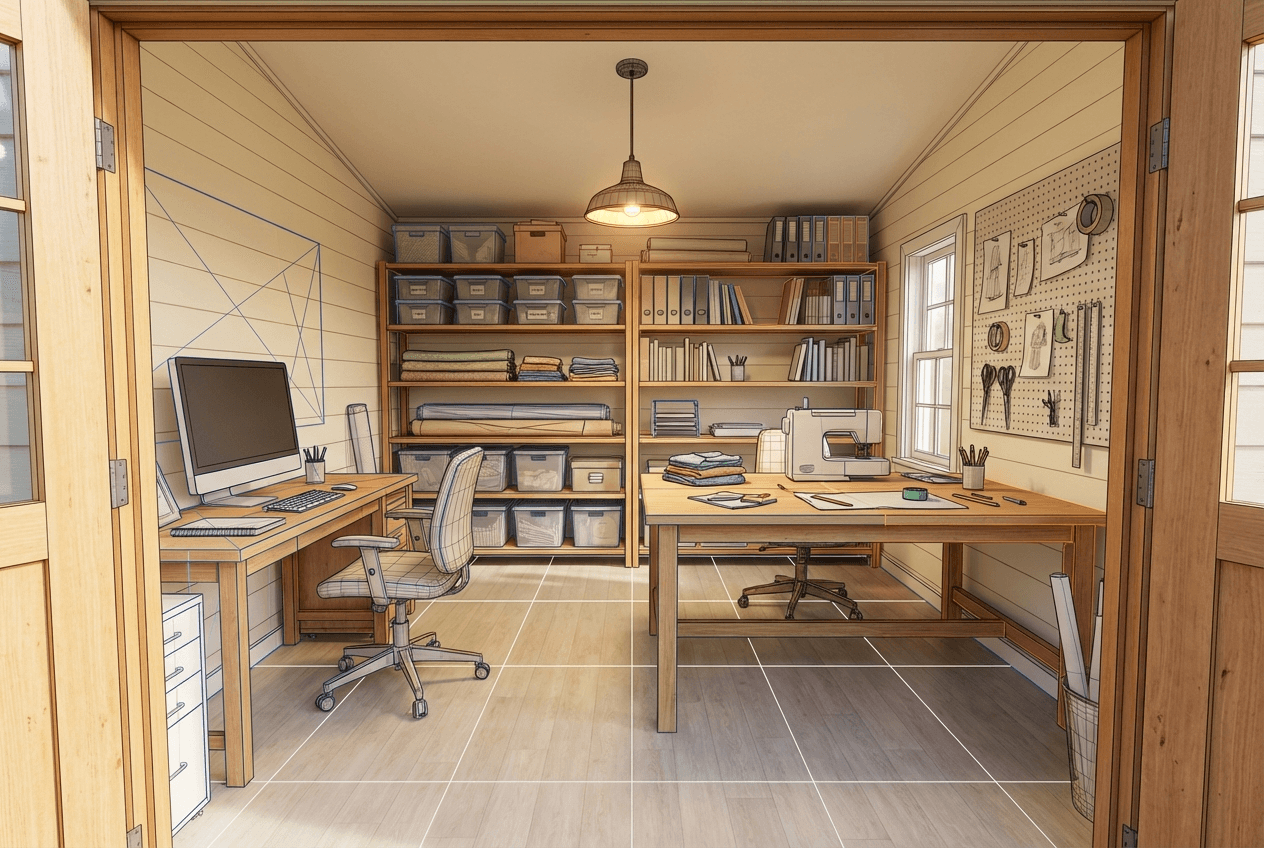
If you work from home mornings and use the afternoons for crafting, sewing, or art, a dual-purpose layout lets you keep both in one space without compromising either.
Craft-Office Combo (12×14 ft)
Total: 168 sq ftKey principle: the work desk and craft table are physically separate with a minimum of 5 ft between them. If you try to use one surface for both, the craft work takes over.
Layout 3: Studio-Office
For coaches, therapists, photographers, tutors, or anyone who meets clients or creates content in the space. This layout prioritizes the dual-use of focused solo work and professional client interaction.
Studio-Office Layout (12×16 ft)
Total: 192 sq ftSpace Planning Dimensions
Measurements that determine whether the space works before you install anything.
Making It Functional (Not Just Beautiful)
Pinterest she shed offices are beautiful. They often don't work well. The common gap between what looks good and what works:
Light: Natural light from a window facing north or east is ideal (no direct sun glare on screens). South and west windows require blinds or shading for afternoon computer work.
Climate: An uninsulated she shed is a seasonal space at best. The minimum viable spec: R-13 walls, R-19 ceiling, a mini-split or dedicated electric heat. Without this, the space becomes uncomfortable and gets avoided from October to April (or June to August, depending on climate).
Connectivity: If you need reliable video calls, run ethernet from the house. WiFi that barely reaches across the backyard will drop when you can least afford it. A single Cat6 cable buried in conduit ($200–$500 DIY, $500–$1,000 professional) is the permanent solution.
Ergonomics: The shed office gets the same investment as any other workspace — proper chair ($200–$800), monitor at eye level, keyboard at elbow height. Don't furnish a space you'll spend 40 hours a week in with the items that didn't make it into the house.
Budget Tiers
She Shed Office Budget Tiers
- Repurpose an existing shed: insulate, add electrical outlet
- WiFi extender or basic ethernet run
- IKEA desk + ergonomic chair
- Portable AC + electric space heater (not ideal for year-round use)
- Trade-off: limited comfort in temperature extremes
- New shed structure (kit or framed) designed as an office from the start
- Full insulation: walls, ceiling, floor
- Dedicated electrical circuit + proper lighting
- Mini-split HVAC ($1,500–$2,500 installed)
- Ergonomic desk, chair, and storage system
- Custom-designed and built structure
- Full exterior and interior finish (cedar cladding, hardwood floor, plastered walls)
- Sub-panel, data cabling, smart lighting
- Built-in cabinetry, desk, and storage
- Planning permission typically required at this level
Frequently Asked Questions
How do I add a she shed office without planning permission?
In most US jurisdictions, a free-standing structure under 200 sq ft that isn't connected to home utilities (water/sewer) doesn't require planning permission. Key word: check your local zoning code. Many HOAs have additional restrictions on accessory structures. The electrical connection is typically the trigger for a permit requirement.
What's the best flooring for a she shed office?
For comfort: luxury vinyl plank (LVP) over a rigid foam underlayment. It's warm underfoot, moisture-resistant, and easy to install in a shed space. Avoid carpet in sheds (humidity and allergens). Avoid bare concrete (cold and hard for all-day work).
Do I need to heat and cool it separately from the house?
Yes, unless the shed is immediately adjacent and well-connected. A mini-split is the gold standard: efficient, quiet, heats and cools, and doesn't require ductwork. A baseboard heater + portable AC is a workable budget substitute, but both are noisier and less energy-efficient.
Related Guides
- She Shed Ideas: Complete Guide — the full she shed planning resource
- She Shed Hub — all she shed content
- Build vs Buy a Shed — which path makes more sense for your budget
- How to Make a Shed Livable — insulation, electrical, and habitability
Use the AI Garage Designer to plan your she shed office layout — including desk placement, storage, and setup recommendations based on your specific shed size and work style.