
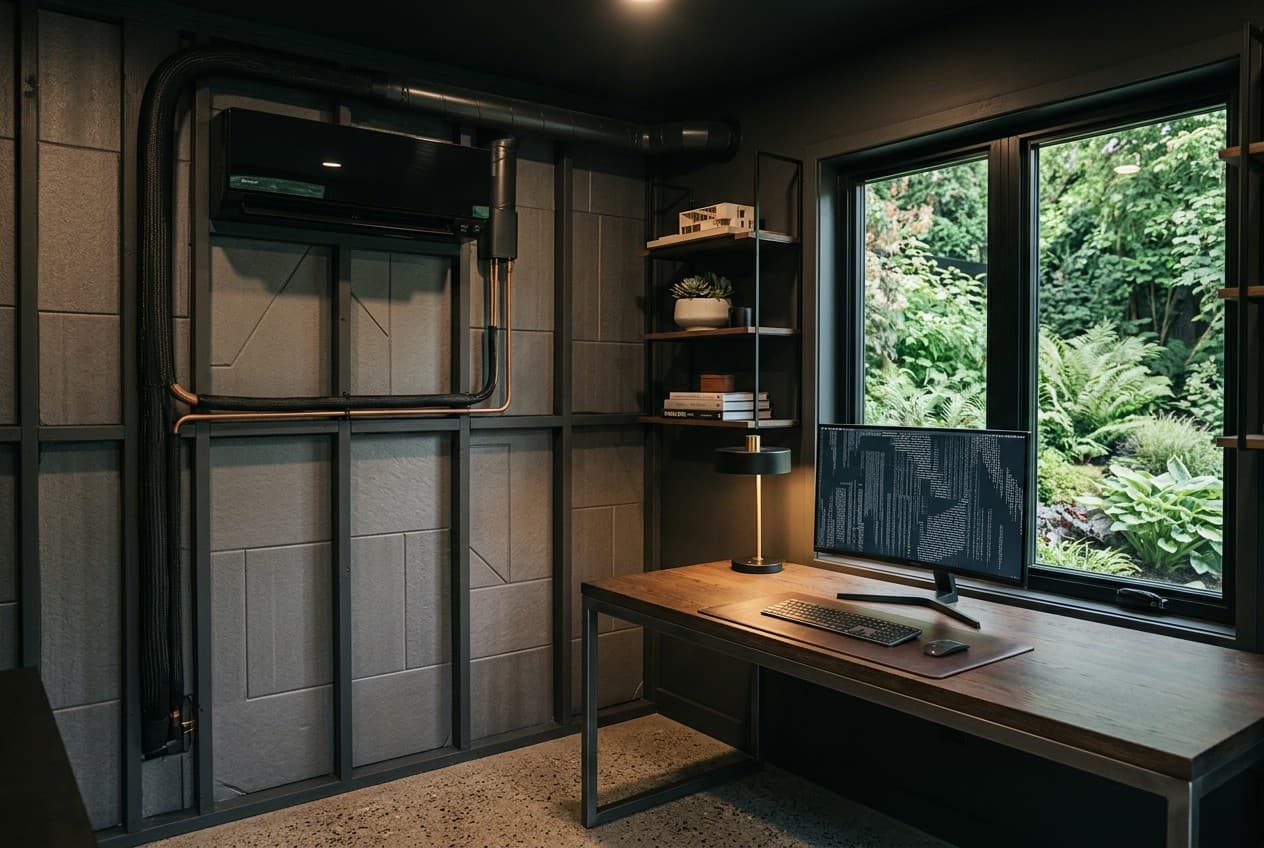
Why Insulation and HVAC Are the Foundation, Not the Finish
A shed office without proper insulation and climate control is not a year-round workspace — it's a fair-weather one. In most of North America, that means comfortable for roughly 4 months and unusable (too hot or too cold) for the other 8.
The investment in insulation and HVAC pays off every working day that would otherwise be spent in a too-cold or too-hot shed. It also extends the life of the structure by managing condensation, which is the primary cause of shed rot and interior deterioration.
This guide covers both decisions — insulation and climate — in the context of a shed converted for daily professional use. For a full shed conversion walkthrough, see How to Convert a Shed to a Home Office. For broader habitability topics, see How to Make a Shed Livable.
Insulation Options Compared
| TypeRecommended | R-Value/Inch | DIY | Best Application | Cost/Sq Ft | Limitation |
|---|---|---|---|---|---|
| Fiberglass batts (R-13/R-19) | R-3.2–3.8 | Yes | 2×4 or 2×6 stud walls, ceiling joists | $0.30–$0.60 | Requires vapour barrier; gaps reduce effectiveness |
| Rigid XPS foam (R-10 board) | R-5/in | Yes | Floor slabs, thin-wall sheds, over rafters | $0.60–$1.00 | Seams need taping; may need fire-rated cover |
| Closed-cell spray foam | R-6–7/in | No (pro) | Rim joists, irregular gaps, combined air seal + insulation | $1.50–$3.50 | Pro application only; high cost |
| Mineral wool batts | R-3.7–4.2/in | Yes | Same as fiberglass but with better fire resistance and acoustics | $0.50–$0.90 | Higher cost than fiberglass; stiffer handling |
| Blown fiberglass (attic) | R-2.5–3/in | With rental equipment | Attic/ceiling spaces with joist access | $0.40–$0.70 | Needs containment barrier; settles over time |
R-Value Requirements by Climate
IECC climate zones. For a year-round professional workspace with active heating/cooling.
HVAC Options for Shed Offices
Shed Office HVAC — Cost Comparison (Installed)
Mini-split (recommended for daily use): A ductless mini-split heat pump is the correct solution for a year-round shed office. One head unit (9,000 BTU is right for 120–200 sq ft in an insulated shed) heats and cools. Operating cost is lower than resistive electric heat — a heat pump moves heat rather than generating it. Installation requires a dedicated 240V circuit and professional refrigerant handling. Total installed cost: $1,500–$2,500.
Portable AC + space heater (budget): Adequate for moderate climates. A portable AC ($200–$350) handles summer; a 1,500W electric space heater ($40–$80) handles winter. Limitations: portable AC units are louder than mini-splits, require a window vent hose, and are less efficient. But the combined $250–$430 cost is accessible when a mini-split isn't in the budget.
Window AC: Lower cost than portable ($150–$300) but requires a window opening of the right size. Shed windows are often not standard sizes — measure before purchasing. Cooling only; needs a separate heater for winter.
The Correct Installation Sequence
For a shed office insulation and HVAC project, order matters:
- Structural repairs (roof, wall rot, foundation) — before any insulation
- All rough electrical (including HVAC circuit) — before insulation closes the walls
- Floor insulation (rigid foam or joist batts) — before finish flooring
- Wall insulation (batts + vapour barrier) — before drywall
- Ceiling insulation — before ceiling finish
- Drywall / interior finish — completes the thermal barrier
- HVAC installation — after the interior is closed
Running the HVAC circuit before insulation is the step most often skipped and most expensive to fix after — the wire run through the wall becomes inaccessible once insulation and drywall are in.
Related Guides
- How to Convert a Shed to a Home Office — the full conversion walkthrough including electrical and internet
- Shed Office Ideas That Work for Remote Jobs — layout planning before the conversion starts
- How to Make a Shed Livable — broader habitability guide covering moisture, light, and ventilation
- Shed Office Hub: Complete Guide — the full planning resource
Use the AI Garage Designer to plan your shed office conversion — zone layout, insulation spec, and HVAC placement for your specific shed dimensions.