
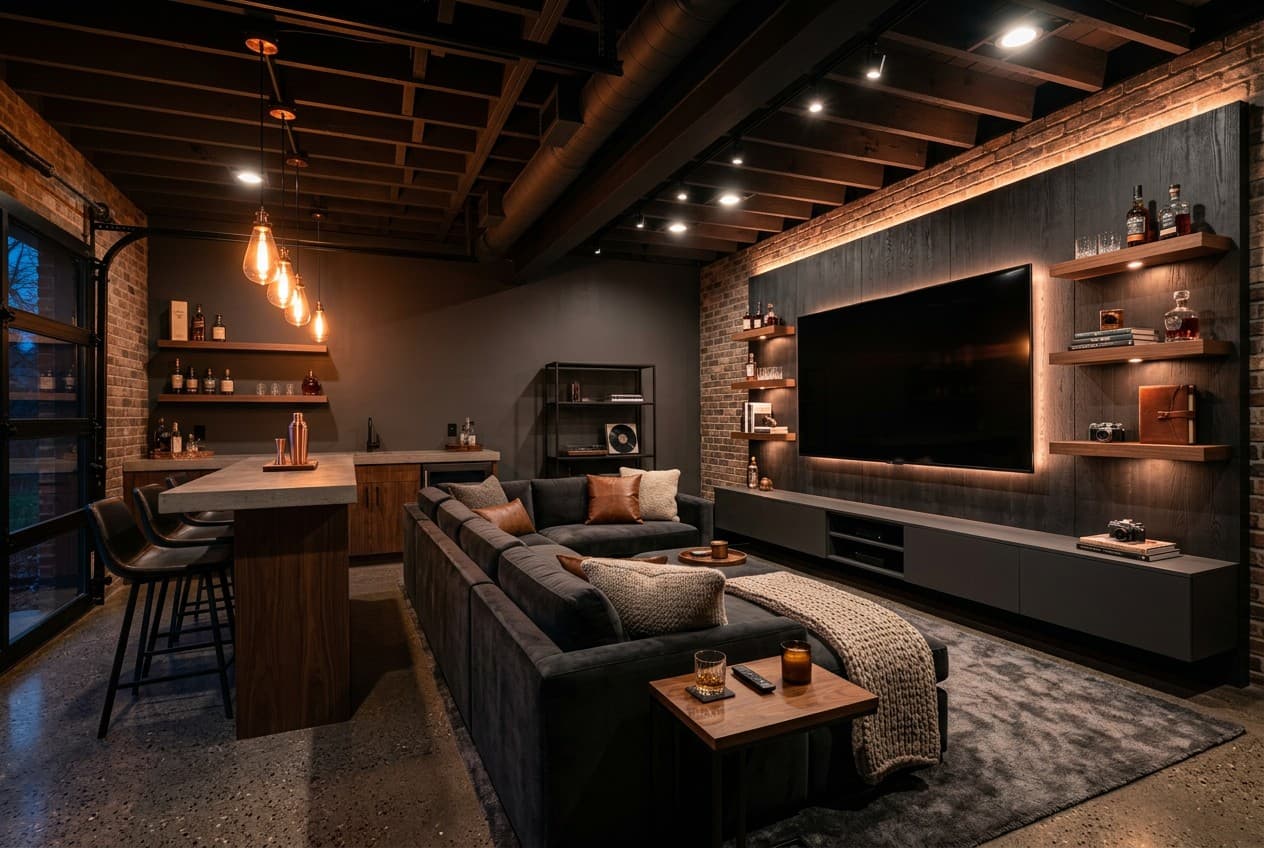
You have the space. A garage sitting half-empty, a detached shed collecting junk, or a structure that hasn't been used for anything purposeful in years. The question isn't whether you can turn it into a man cave — you can. The question is how to do it without wasting money on the wrong things.
The key variables are: available square footage, whether you'll need year-round climate control, and how you'll actually use the space — watching sports, gaming, tinkering, having people over, or some combination. Get those three decisions made before you spend a dollar, and the rest of the build becomes straightforward.
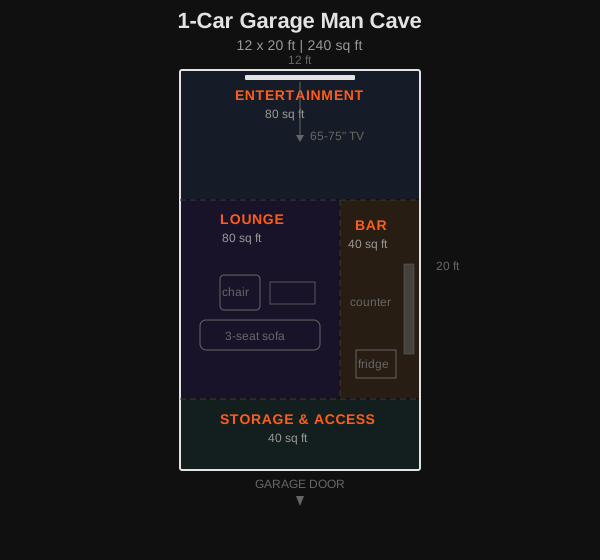
1-Car Garage Man Cave Layout
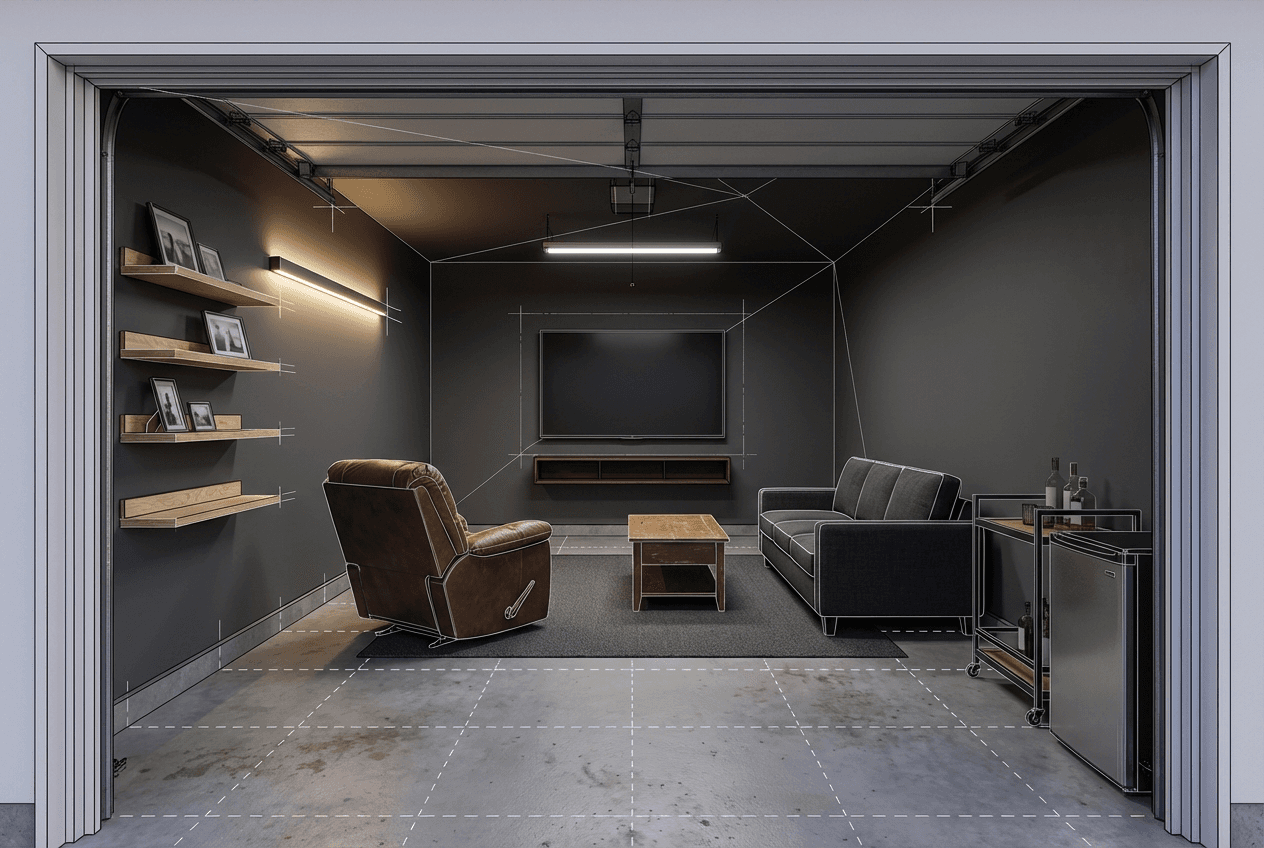
A standard single-car garage runs about 12×20 ft (240 sq ft). It's tight but highly workable if you plan zones before you place furniture.
1-Car Garage Man Cave Layout
Total: 240 sq ftWhat fits: A 65–75 in TV works well at a 10–12 ft viewing distance. A 3-seat sofa plus a recliner gives you solid seating without eating the floor. A bar cart or compact cabinet handles drinks without requiring plumbing.
What doesn't fit: A full-size pool table (needs at least 19×14 ft with cue clearance). A rear surround sound setup without acoustic treatment. Both are upgrades for later if you move to a 2-car space.
2-Car Garage Man Cave Layout
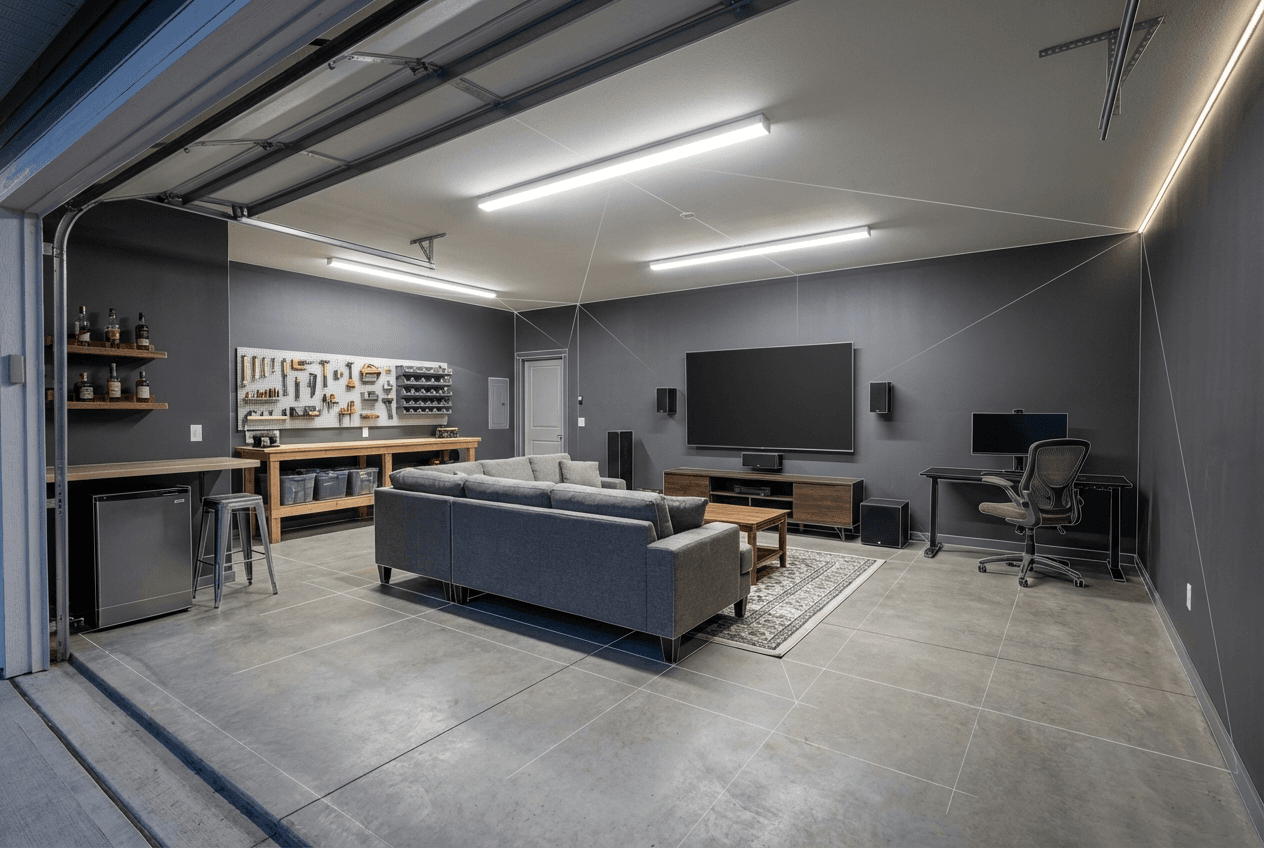
Two-car garages (typically 20×24 ft, 480 sq ft) give you room for a proper split between entertainment, gaming, lounge, and a functional workshop corner — all without any zone cannibalizing another.
2-Car Garage Man Cave Layout
Total: 480 sq ftThe 2-car layout is where you can start thinking about a proper bar — a counter with stools, a kegerator under the counter, and wall storage for bottles. At this size you also have the ceiling height and wall run for rear surround speakers without the sound feeling cramped.
Shed Man Cave Layout
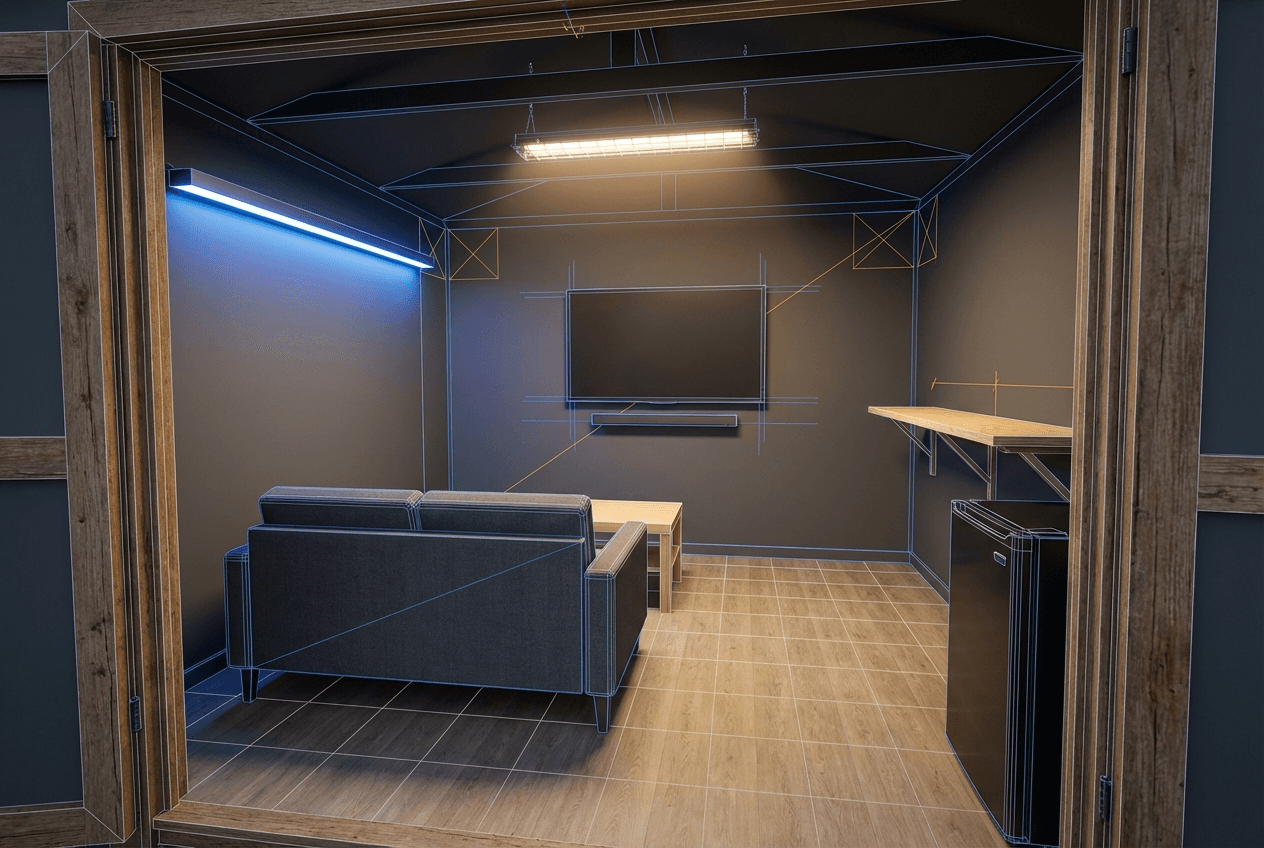
A well-built shed in the 120 sq ft range (10×12 ft) is a genuine man cave if you keep the brief tight. One primary activity, minimal furniture, and good insulation. Trying to cram in a bar, gaming desk, and lounge seating is how you end up with a space that does nothing well.
Shed Man Cave (10×12 ft)
Total: 120 sq ftShed man caves live or die on insulation and airflow. A poorly insulated shed is unusable in summer and winter. Before spending anything on gear or furniture, sort the walls, floor, and ceiling — rigid foam board on all surfaces, then a vapor barrier, then your finish material. Budget roughly $300–$600 for a 10×12 shed done properly.
Budget Breakdown by Tier
Man Cave Budget Tiers
- Second-hand furniture — sofa, chairs, and a coffee table from Facebook Marketplace
- Used 55 in OLED or QLED TV (~$300–$400 used)
- DIY bar shelf from plywood and pipe brackets
- Basic LED strip lights for ambience (~$30–$60)
- Trade-off: no climate control, no acoustic treatment — summer and winter sessions become difficult
- New sectional sofa or 3-seat sofa plus recliners ($600–$1,200)
- 65–75 in 4K TV with a soundbar ($700–$1,200)
- Mini split or portable AC/heat unit for year-round comfort ($300–$800 installed)
- Epoxy floor coating or interlocking rubber tiles to replace bare concrete ($200–$600)
- What this unlocks: year-round usability, proper sound, and a space you'll actually want to spend time in
- Built-in bar with countertop, backsplash, and under-counter kegerator
- 85 in+ TV or projector and retractable screen setup
- Full HVAC mini split system (dual-zone for shed + garage)
- Custom flooring — epoxy with flake broadcast or LVP click-lock panels
- Acoustic panel treatment on back wall and ceiling corners
- Dedicated electrical subpanel for clean power to AV equipment
1-Car Garage Layout Diagram
The Two Things Most People Get Wrong
Climate control comes before everything else. A garage or shed without insulation and temperature management is usable maybe six months of the year in most US climates — less in extreme heat or cold regions. Every dollar spent on a TV or sofa before addressing this is money that will underperform because you won't use the space comfortably.
Insulation and a mini split system should be considered infrastructure, not upgrades. A 9,000 BTU mini split covers a 2-car garage in most climates. A portable unit works for a shed. Budget roughly $800–$1,500 for the mini split plus installation for a 1-car garage. It is the single highest-ROI spend you can make.
Insulation unlocks everything else. Once the space holds temperature, acoustic treatment becomes more effective (there's less ambient noise bleed), electronics don't get damaged by moisture and heat cycling, flooring products bond correctly, and you actually want to spend time out there year-round. Skipping it means you'll redo half the build when you eventually address it anyway — usually after one brutal summer session that kills the mood.
Get the shell right first. Then build the experience inside it.
What to Do Next
Ready to take this from idea to actual floor plan? The Garage Designer tool lets you map out your zones, choose your layout type, and get a customized plan based on your exact dimensions and use case.
For a deeper look at garage-specific layouts and zone planning for both 1-car and 2-car builds, see the full man cave planning guide.
If you're considering a detached space rather than the garage, the garage man cave ideas guide covers layouts and zone planning specific to detached builds. Once you've settled on the space, the gaming room ideas guide is a useful next read if gaming will be your primary activity — it covers monitor placement, acoustic treatment, and co-op zone dimensions that apply to any budget tier. If fitness is part of your planned use alongside the lounge and bar setup, the garage gym ideas guide shows how to carve out a functional workout zone within the same budget and space constraints.