
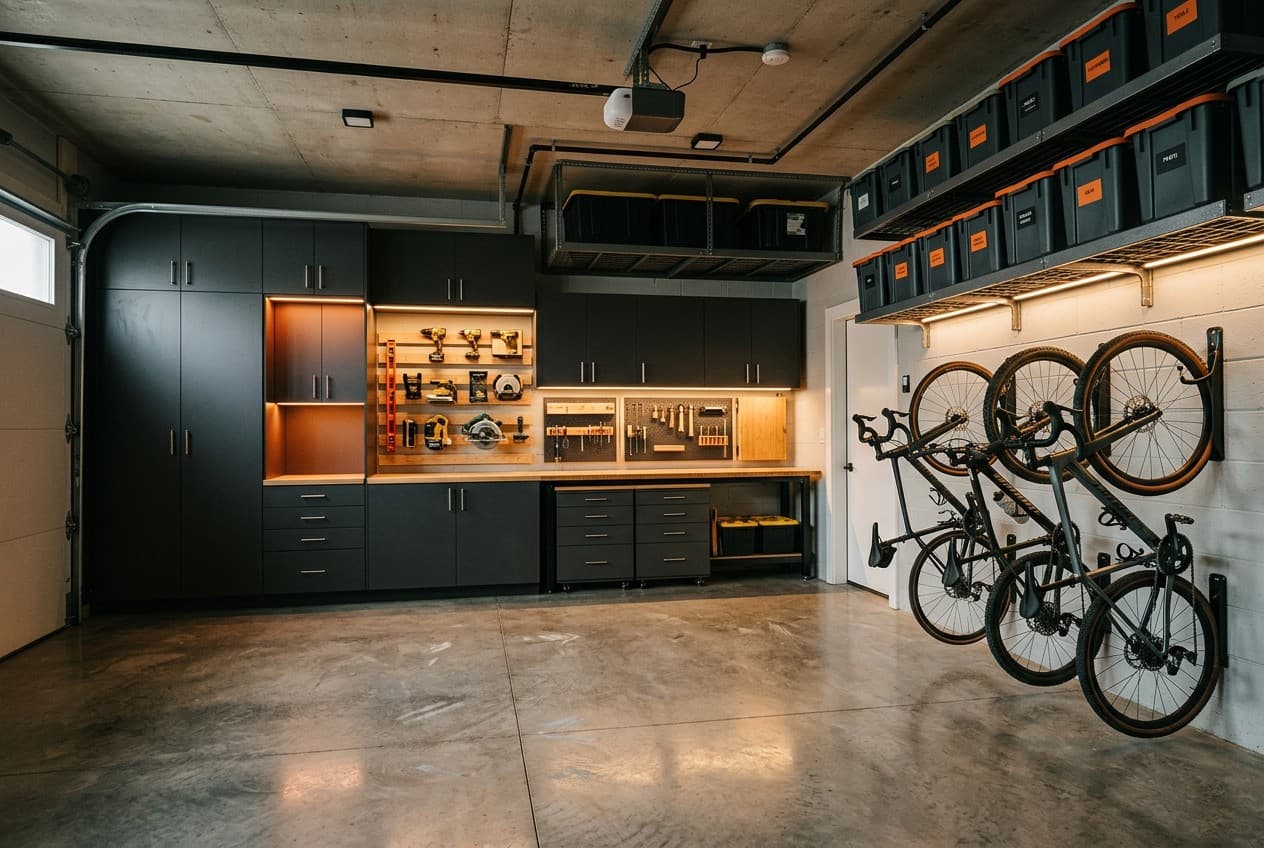
The Real Problem Isn't Space — It's the Absence of a System
Most garages aren't disorganized because they're too small. They're disorganized because there's no system. Everything lands wherever it fits, and "finding a home" for things never actually happens.
The result: tools you own but can't find, items you buy twice, a car parked in the driveway because the garage is full. The typical American garage has 400+ square feet of ceiling space and 150+ square feet of usable wall space — almost all of it unused. The floor becomes the default storage zone, which is also the worst one.
This guide gives you a system, not just ideas. Real zones, real dimensions, and budget ranges you can actually plan against.
Start With Zones, Not Products
Before you buy a single rack, shelf, or bin — zone your garage. Every organization project that fails does so because products were purchased before zones were defined.
The four zones every garage needs:
- Active work zone — floor space you'll actually use for projects, parking, or working out
- Frequent-access wall zone — tools and gear you reach for weekly, at eye level
- Seasonal wall/overhead zone — items used 2–4 times a year (holiday bins, camping gear, sports equipment)
- Deep storage zone — items that rarely leave (spare parts, archived items, hazmat)
Decide on zone boundaries before anything else. Mark them with tape on the floor if it helps.
Zone Layouts for 1-Car and 2-Car Garages
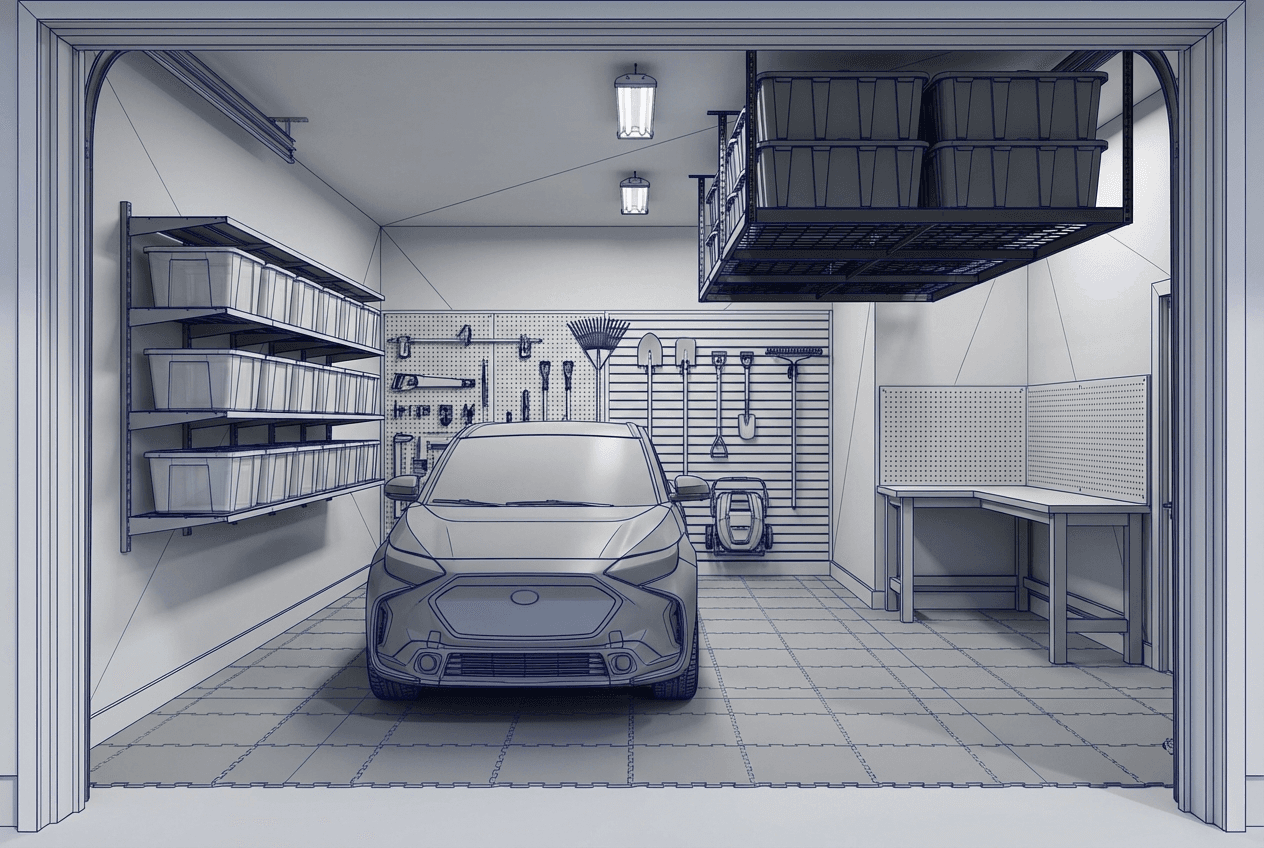
1-Car Garage (12×20 ft) — Organization Layout
Total: 240 sq ft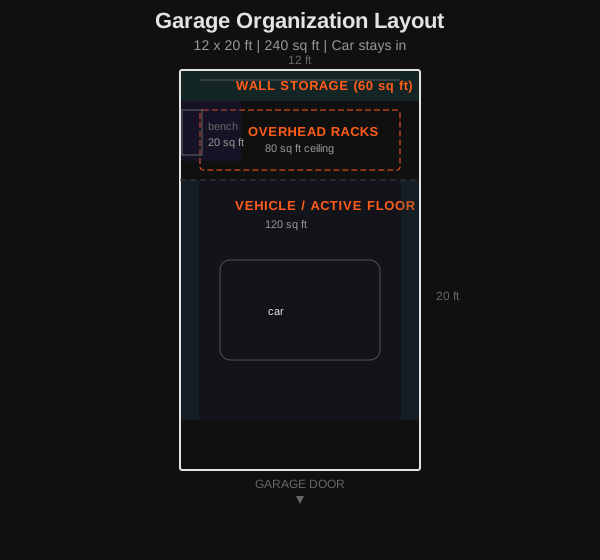
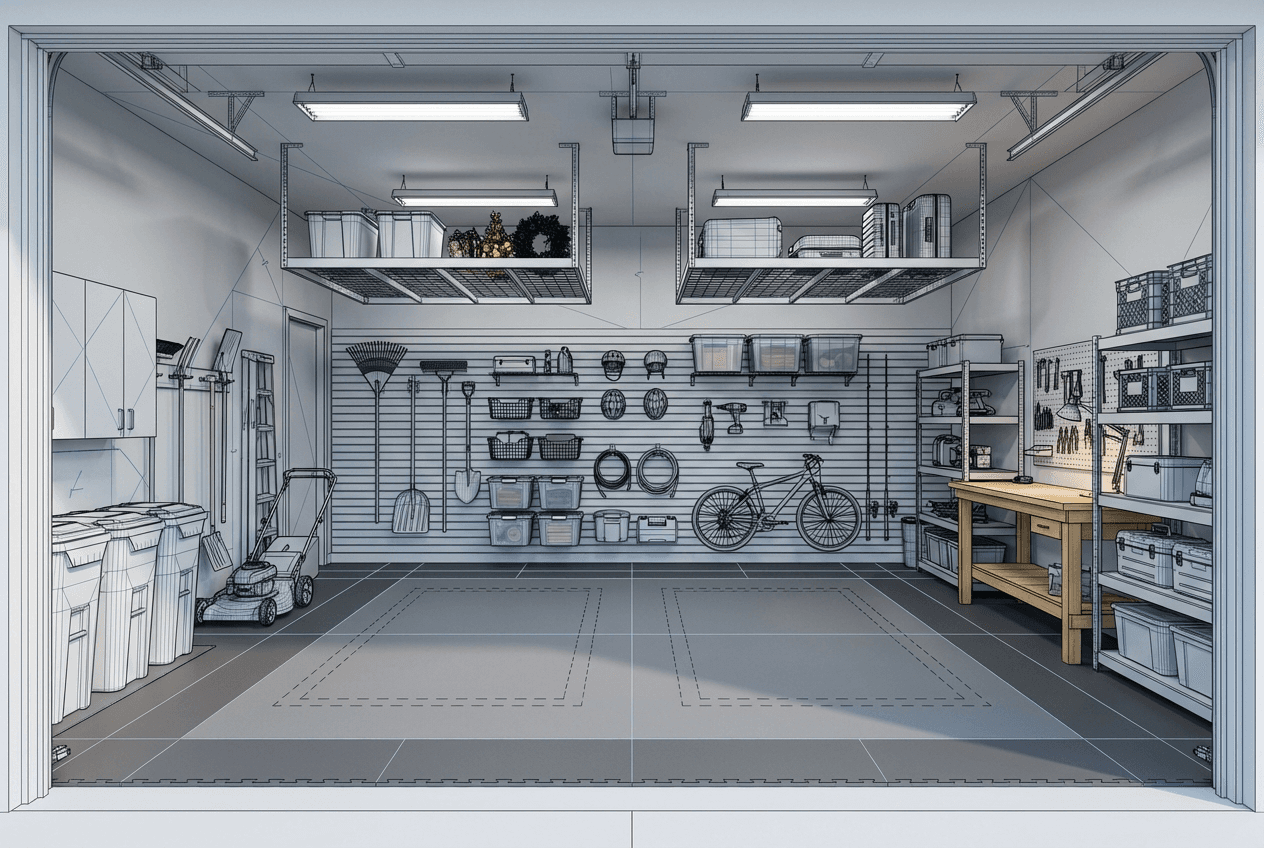
2-Car Garage (20×22 ft) — Organization Layout
Total: 440 sq ftWall Storage Systems
The back wall is your most valuable real estate. Here's how to use it properly.
French Cleat (Best for Workshop Garages)
A French cleat system — horizontal cleats cut at 45° — lets you hang any custom holder anywhere on the wall, rearrange without tools, and add new holders as your needs change. Cost: $80–$200 in lumber for a full wall. Takes a weekend to build. Best for: woodworkers, serious DIYers.
Slatwall Panels (Best for General Garages)
Pre-made slatwall accepts hundreds of off-the-shelf hooks and bins. More expensive than French cleat ($200–$600 for a wall) but faster to install and cleaner-looking. Best for: homeowners who want a turnkey solution with maximum hook variety.
Pegboard (Budget Option)
Classic pegboard is cheap ($30–$80 for a panel), widely available, and works well for small tools. Limitation: hooks shift when you grab tools unless you add pegboard locks. Best for: budget installs, rental garages.
Heavy-Duty Wall Shelves
For bins, paint cans, and medium-weight items, heavy-duty wall-mounted shelves (not bracket systems — the welded steel kind) hold 300–800 lbs each and cost $40–$120 per shelf. These are the workhorses of the back wall.
Overhead Storage
Most garages have 8–10 feet of ceiling clearance. Overhead racks are the single highest-ROI storage upgrade you can make — they take zero floor and zero wall space.
What to store overhead: seasonal bins, camping gear, holiday decorations, luggage, sporting equipment (bikes, kayaks, skis), anything accessed less than monthly.
What NOT to store overhead: heavy tools (safety risk if rack fails), hazardous materials, anything you access frequently.
Recommended systems:
- 4×8 overhead rack — standard platform, 600–1,500 lb capacity, adjusts to ceiling height ($100–$300). Works in most garages.
- Ceiling hoist — for bikes, kayaks, and heavy seasonal items. One-pull system raises/lowers gear. $50–$150 per hoist.
- Track-mounted sliding racks — slides side-to-side, good for low ceilings where headroom over vehicle is tight.
Minimum clearance between rack and vehicle roof: 8 inches. Most systems install at 84–96 inches from floor — check your ceiling height before ordering.
Floor Organization: What Actually Goes There
The floor is where most garages fail. "I'll deal with it later" items stack up until the floor is unusable.
Rules for the floor:
- Only vehicles and active projects belong on the floor permanently
- Tall items (lawn mowers, shop vacs, tall equipment) go against the wall, not in the middle
- Freestanding shelving units are floor-space thieves — only use them if you have no wall to mount to
- Rolling tool chests are fine — they can move when you need floor space
See our How to Organize a Tool Chest guide for what goes inside your rolling chest.
Cabinet Systems
Cabinets are worth the investment if:
- You need to lock up chemicals, sharp tools, or items away from children
- You want a clean, finished look
- Your back wall has drywall (not studs) — cabinets hide the surface condition
Types to consider:
- Steel utility cabinets ($150–$500 each): bomb-proof, best for heavy tools and fluids
- Modular garage cabinet systems (Gladiator, NewAge, etc.) ($800–$3,000 for a full set): look good, modular, but pricey
- Basic wood cabinets: cheapest DIY option, but wood + garage humidity = warping unless sealed
Don't over-cabinet. Cabinets hide everything — including things you need quickly. Use cabinets for chemicals, spare parts, and rarely accessed items. Use open wall systems for tools and frequently used gear.
Budget Tiers
Garage Organization Budget Tiers
- Pegboard wall panel + hooks
- 2× heavy-duty wall shelves
- Basic overhead rack (4×8)
- Bin/label system for existing shelves
- Trade-off: less flexibility, more DIY time
- Slatwall system (full back wall)
- 4×8 overhead rack with hoist
- Workbench with lower shelf
- Steel utility cabinet
- Rolling tool chest
- Modular cabinet system (full wall)
- Epoxy floor coating
- Ceiling rack system + multiple hoists
- Custom workbench with pegboard
- Full slatwall or French cleat system
The One Rule That Keeps It Organized
Everything needs a specific home. Not a general area — a specific hook, bin, or drawer.
If you have to ask "where does this go?" when putting it away, you don't have a home for it yet. That's your next task: create the home before it lands on the floor.
Label everything. Even if it's obvious to you now, it won't be to the next person who uses the space — or to you in six months when the routine breaks.
Related Guides
- Garage Tool Storage Ideas for DIYers — deep dive on tool-specific storage systems
- Overhead Garage Storage Guide — racks, hoists, and ceiling systems
- How to Organize a Tool Chest — what goes inside the rolling chest
- Garage Storage Hub: Complete Guide — the full garage storage system guide
Use the AI Garage Designer to get a layout plan built for your specific garage size, vehicle situation, and storage priorities.