
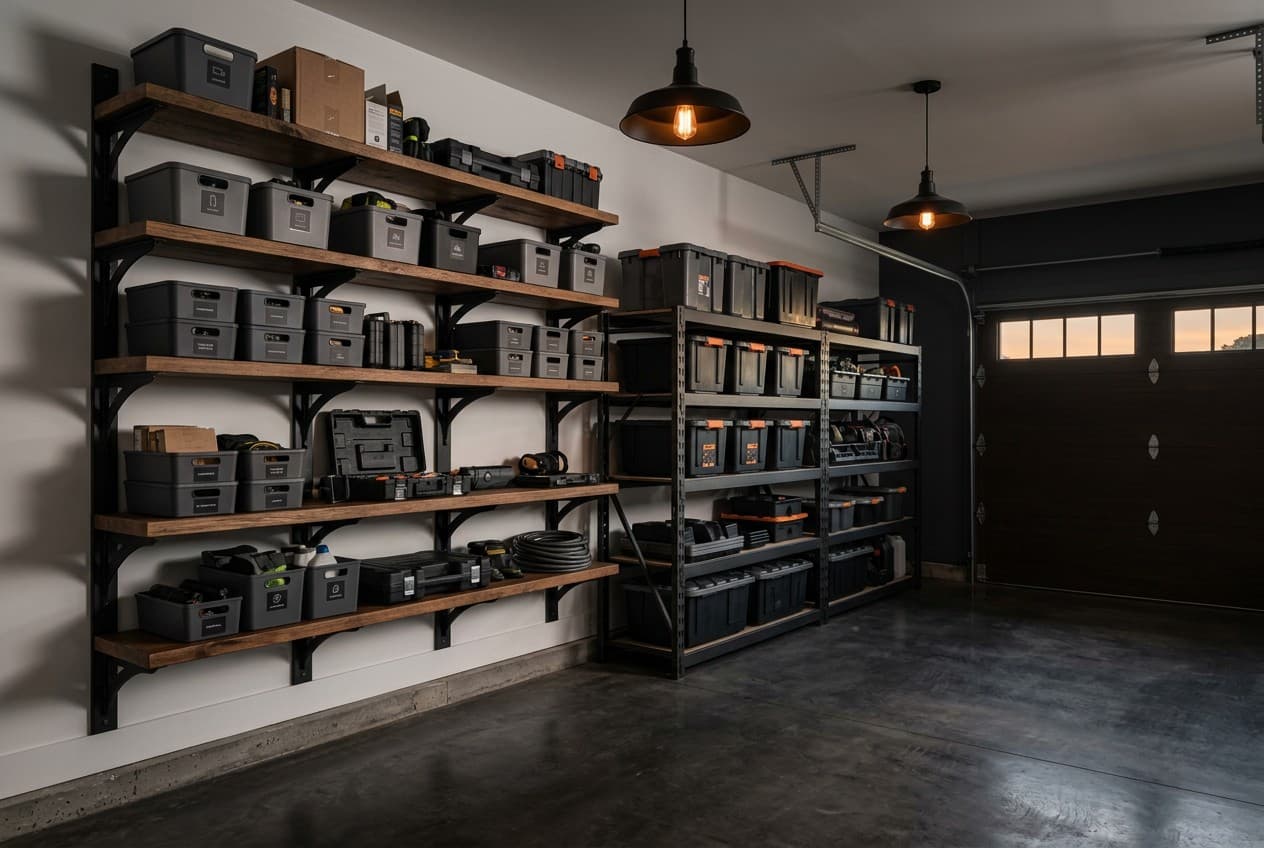
The Right Shelving Depends on Your Garage Type
A 2-car finished garage with drywall walls has different shelving options than an unfinished 1-car with exposed studs. Before committing to a system, the three questions that determine the right choice:
- Are the walls finished or unfinished? Unfinished stud walls allow direct 2×4 ledger mounting — stronger and cheaper than surface hardware. Finished drywall needs stud-located brackets or freestanding units.
- How much floor space can the shelving use? Freestanding units need floor space. Wall-mounted shelves reclaim floor space.
- What goes on the shelves? Heavy tools and paint cans on lower shelves need high weight-rated brackets. Lightweight seasonal storage on upper shelves can use lighter hardware.
The Main Garage Shelving Options
Garage Shelving Zone Layout — 2-Car Garage
Total: 20×22 ftOption 1: Freestanding Metal Wire Shelving
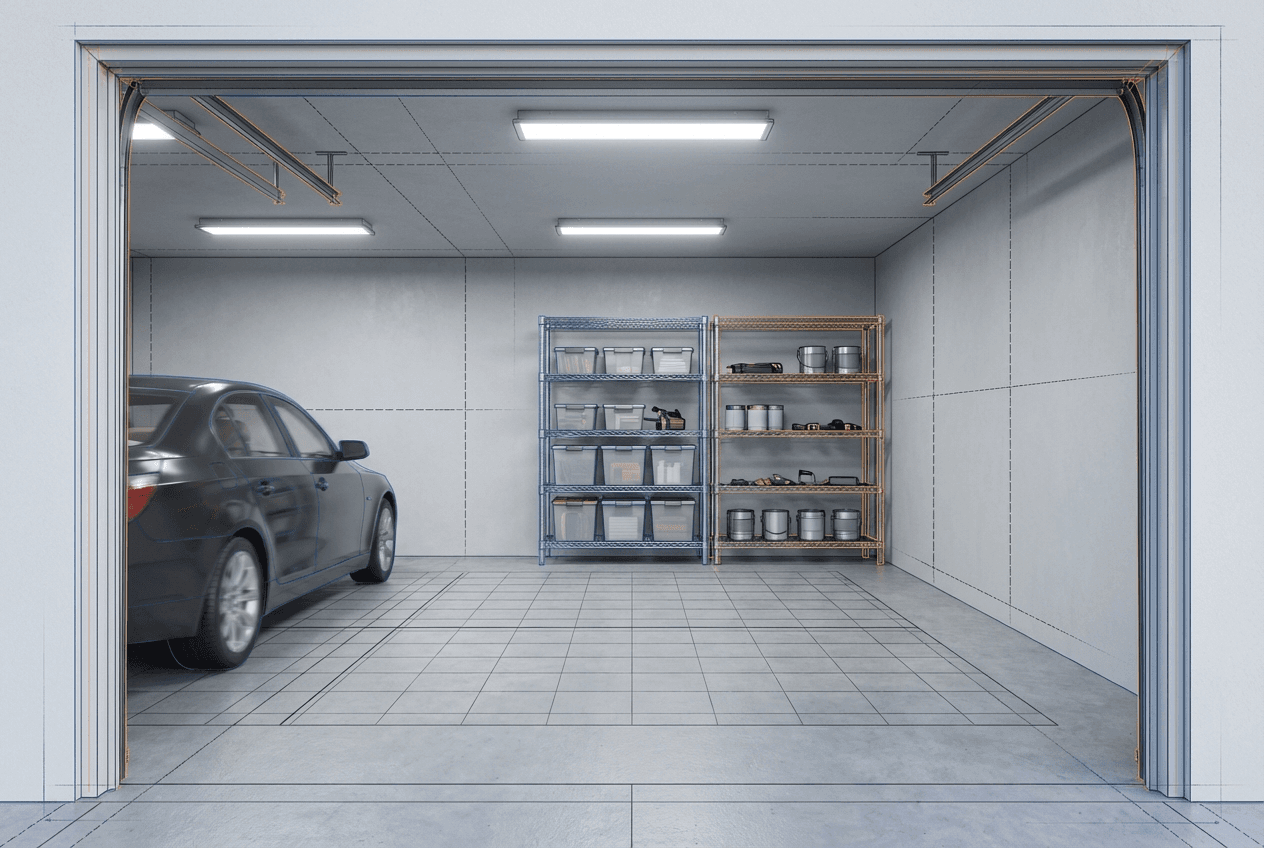
The most accessible garage shelving solution. No installation required — bolt together, adjust shelf height, load. Available at Costco, Home Depot, and Amazon in several weight ratings.
Best specification: 4-shelf or 5-shelf unit, 77 inches tall, 48 inches wide, 18–24 inch depth. NSF-rated wire shelving (often found in restaurant supply) is the most durable option at similar cost to big-box alternatives.
Weight rating: look for 350–500 lb per shelf minimum for tools and hardware. Wire shelving with 150 lb ratings is for light household goods only.
What it's best for: garages where you rent rather than own (no wall modification), starter setups, and secondary storage zones. The flexibility of no installation is also a limitation — a rack that shifts is a rack you'll work around.
Cost range: $80–$200 for a quality 4–5 shelf unit (Husky, Gorilla Rack, SafeRacks).
Option 2: Wall-Mounted Brackets + Shelves
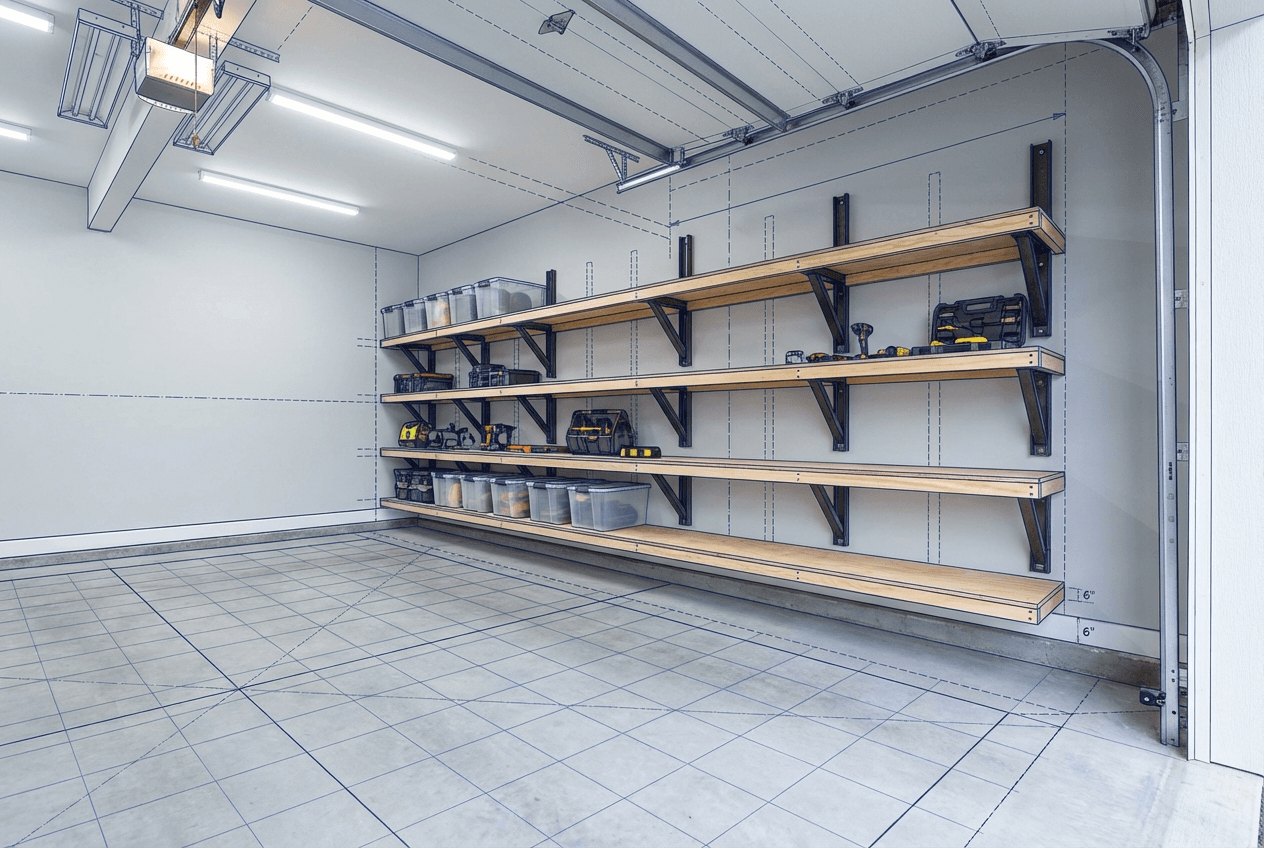
Wall-mounted shelving uses brackets anchored into studs, with plywood or melamine boards as the shelf surface. This is the standard approach for finished-wall garages and is more permanent than freestanding.
Key spec: 10-inch or 12-inch heavy-duty shelf brackets, 16-inch stud spacing, lag bolts (not drywall screws) into studs. A pair of proper heavy-duty brackets (Knape & Vogt, Stanley, or equivalent) holds 150–400 lbs per pair depending on rating.
Shelf material: 3/4-inch plywood is the right choice for garage shelving. MDF sags under heavy loads and is not moisture-tolerant. Melamine is acceptable for lighter loads.
What it's best for: finished garages where floor space is premium — the shelves float 6–8 inches off the floor, making cleaning easier and giving the visual impression of more floor space.
Cost range: $40–$120 for a 6-foot run of three shelves (brackets + plywood).
Option 3: DIY 2×4 Stud-Wall Shelving
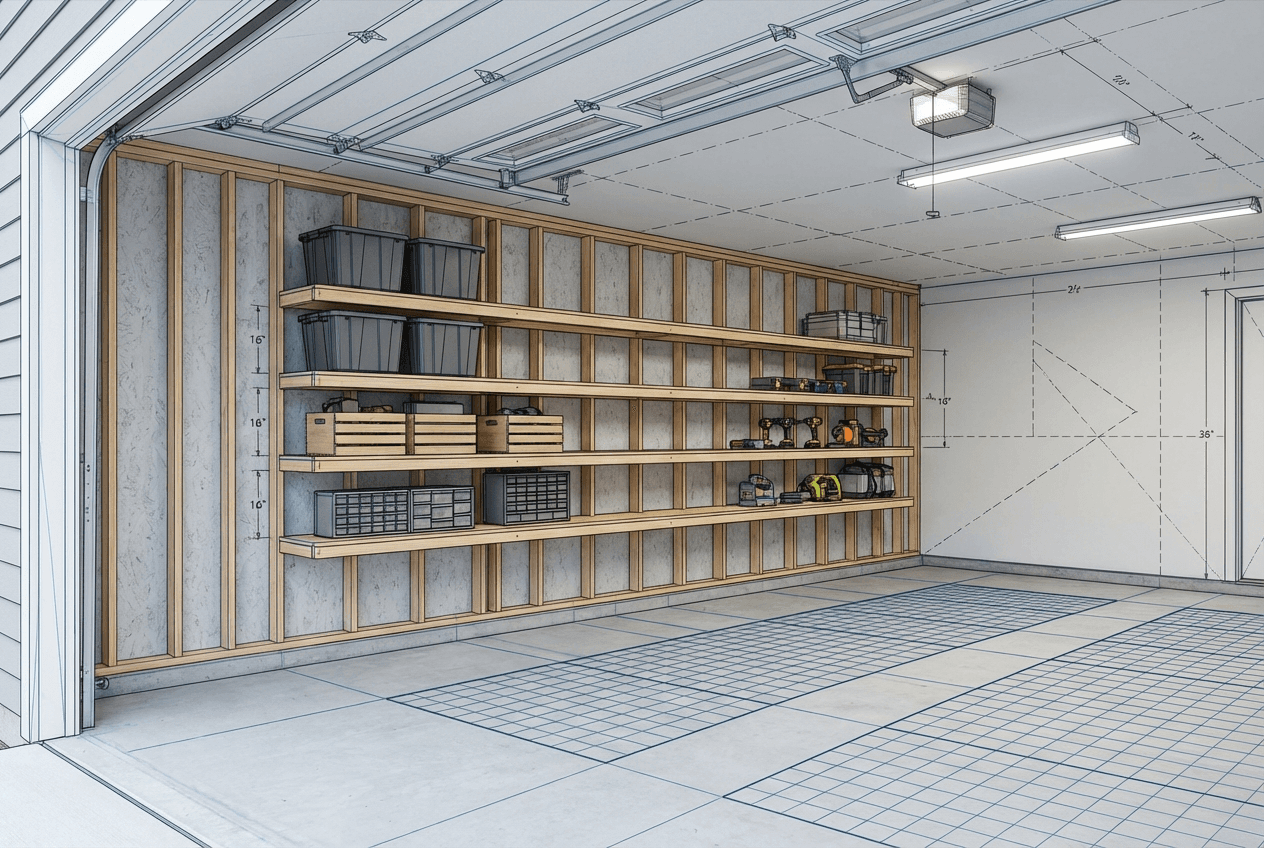
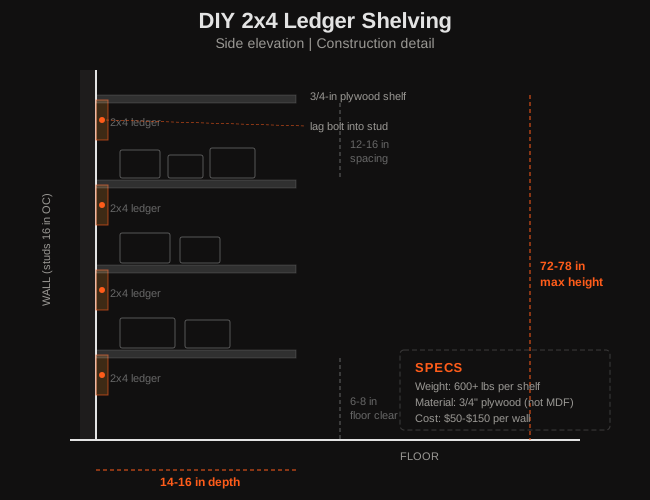
For garages with unfinished stud walls, the most cost-effective and durable approach: ledger boards of 2×4 lumber lag-bolted directly into the wall studs, with 3/4-inch plywood shelving across them.
Depth: 12–18 inches. Shelf spacing: 12–16 inches for standard bins; 20–24 inches for tall items.
Weight capacity: higher than most pre-made systems — limited by stud anchoring rather than bracket capacity. A well-constructed 2×4 ledger system holds 600+ lbs.
Cost range: $50–$150 in materials for a full rear wall of shelving (16 linear feet, 4 shelves high). The cheapest system that outperforms everything more expensive.
Option 4: Modular Garage Cabinet Systems
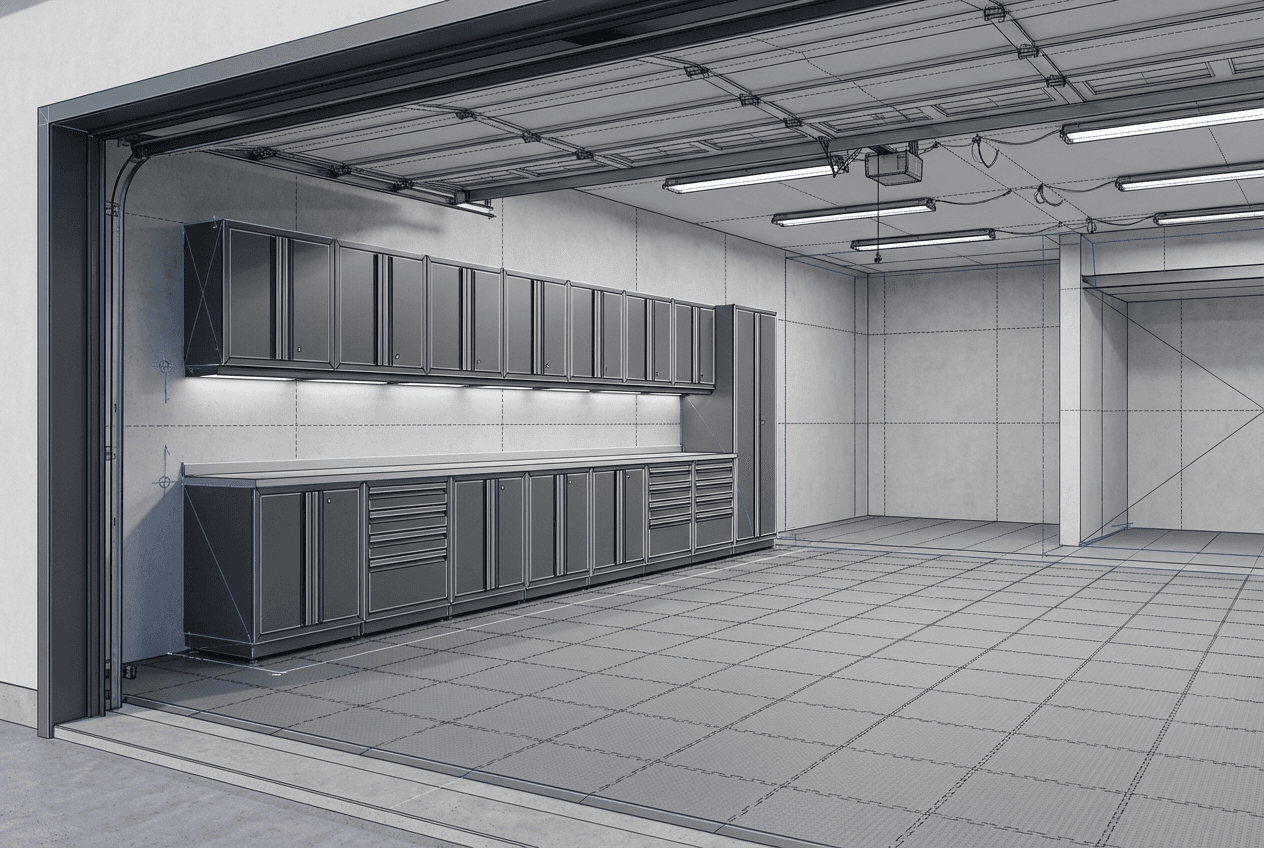
Cabinets (Gladiator, Husky, NewAge) offer enclosed storage — important for tools, paint, chemicals, and anything that shouldn't collect dust or be accessible to children. Cabinet systems are more expensive per cubic foot than open shelving, but add organisation and finished appearance.
Best configuration: base cabinets at floor level (drawers for hardware, tools) + wall cabinets above (chemicals, paint, small equipment) + open shelving at the top.
Cost range: $500–$2,000 for a 12-foot wall section. Budget option: freestanding open shelving for bulk storage + one set of cabinets for secured/dust-sensitive items.
Garage Shelving — Budget Tiers
- 2× freestanding 5-shelf metal racks (Gorilla Rack or equivalent) — $80–$160
- No installation required — bolt together and load
- Covers 8–10 linear feet of storage wall
- Best for: renters, starter setups, secondary storage areas
- DIY 2×4 ledger shelving (full rear wall, 4 shelves) — $80–$180 materials
- Wall-mounted bracket shelves (1–2 side wall runs) — $80–$200
- One freestanding unit for floor-level heavy storage — $80–$120
- Best for: homeowners with unfinished garage walls, serious DIY users
- Modular cabinet wall section (12 ft) — $500–$1,500
- Overhead ceiling platform for seasonal items — $150–$400
- Slatwall or French cleat panel for tool storage — $100–$300
- Best for: finished garages, long-term ownership, home gym/workshop dual use
Shelving Depth and Height Rules
Shelf depth by use:
- Tools and hardware: 12–14 inches deep. Deeper and items get lost at the back.
- Storage totes (18 gallon): 18–20 inches deep. Most standard totes are 18 in deep.
- Workbench shelving: 24 inches deep minimum. Less and tools won't fit.
Bottom shelf height:
- Leave the bottom 6–8 inches of wall clear for broom and floor cleaning access.
- If parking a car flush to the wall, the bottom shelf should be above the car's bumper height.
Top shelf height:
- Maximum comfortable loading height without a ladder: 72–78 inches (6 ft to 6.5 ft).
- Anything above this becomes infrequently accessed by default — plan accordingly.
Related Guides
- Garage Organization Ideas — full zone planning before buying any shelving
- Overhead Garage Storage Guide — ceiling platforms and hoists to complement wall shelving
- Garage Tool Storage Ideas — dedicated systems for tools specifically
- Garage Storage Hub: Complete Guide — the full planning resource
Use the AI Garage Designer to plan your garage shelving layout — wall zones, overhead storage, and floor configuration optimised for your specific garage dimensions and storage needs.
If you're solving the same shelving problem in a shed, the shed shelving ideas guide covers the same core options — freestanding racks, wall-mounted brackets, and DIY builds — adapted for the narrower footprints and unfinished walls typical of garden and utility sheds.