Small Shed Office Layout Ideas: Making 8×10 to 12×16 Work (2026)
Small shed office layout ideas for 8×10 to 12×16 structures — desk placement rules, zone configurations, and dimension strategies that produce a professional workspace in a compact footprint.
By Michael McDonnell··2 min read
Disclosure: This article contains affiliate links. As an Amazon Associate and partner with other programs, we may earn a commission from qualifying purchases at no extra cost to you. We only recommend products we genuinely stand behind.
The Layout Question Determines Everything
In a small shed office, furniture placement is not a decorating decision — it's a functional one. The desk position determines the sight line, the light direction, and the video call backdrop. The door swing determines where storage can go. The window positions determine where you can sit without glare.
Getting the layout right before ordering furniture avoids the most expensive shed office mistake: a desk that doesn't fit, storage that blocks the door, or a camera position that shows the shed wall behind you on every call.
Dimension Reality by Shed Size
Usable Interior Dimensions by Shed Size
Interior usable space after insulation and framing (subtract 5–7 in per wall from exterior dimensions).
8×10 ft exterior
~7×9 ft interior
63 sq ft usable. Space for one desk configuration and chair only. Storage must be wall-mounted — no floor cabinets.
10×10 ft exterior
~9×9 ft interior
81 sq ft usable. Single focused workspace. Can fit a standing desk + chair + small shelving unit.
10×12 ft exterior
~9×11 ft interior
99 sq ft usable. The practical minimum for a comfortable daily office. Room for desk, chair, and a secondary seating option.
12×14 ft exterior
~11×13 ft interior
143 sq ft usable. Comfortable two-zone office: desk zone + seating area or secondary desk.
12×16 ft exterior
~11×15 ft interior
165 sq ft usable. Can include a standing desk, a small sofa/seating area, and a storage wall.
Layout Configurations
Configuration A — Minimal Focused Office (8×10 to 10×10)
Total: 8×10 ft
Desk zone
Full rear wall — 6–7 ft wide
Storage
Floating shelves above desk + one side wall
Entry clearance
3 ft from door
Desk zone(Full rear wall — 6–7 ft wide)
Single straight or floating desk against the rear wall. Monitor at eye level. Natural light from the side — window on the left for right-handed workers (reduces glare on screen).
Storage(Floating shelves above desk + one side wall)
Floating shelves above the desk at 16–18 in depth. Full-height shelving on one side wall for books, equipment, files. Nothing on the floor.
Entry clearance(3 ft from door)
Keep the door wall clear for full door swing. No storage within the door swing arc — this is the space most often wasted in 8×10 offices.
Configuration B — Dual-Use Office (10×12 to 12×14)
Total: 10×12 ft
Primary desk zone
8 ft wide × 4 ft deep (rear)
Secondary seating
5 ft wide × 4 ft deep (front)
Transition path
3 ft wide (centre)
Primary desk zone(8 ft wide × 4 ft deep (rear))
L-shaped desk in the back corner, using two walls. Maximises desktop surface in a small footprint. Keep monitor centred on the L.
Secondary seating(5 ft wide × 4 ft deep (front))
Loveseat or two armchairs for reading or client calls. Placed perpendicular to the desk zone — the person on camera sees the seating area or a clean wall, not the desk clutter.
Transition path(3 ft wide (centre))
Keep a clear 3-ft corridor between desk zone and seating zone. The room must feel navigable, not crowded.
Configuration C — Full Office (12×16)
Total: 12×16 ft
Standing desk zone
6 ft wide × 3 ft deep (rear)
Seating zone
10 ft wide × 6 ft deep (front half)
Storage wall (side)
12 ft long × 14 in deep
Printer / equipment nook
3 ft × 2 ft
Standing desk zone(6 ft wide × 3 ft deep (rear))
Electric standing desk at the rear wall. Cable management to the floor. Monitor arm frees the desk surface.
Seating zone(10 ft wide × 6 ft deep (front half))
Small sofa or two chairs + a coffee table. Used for reading, calls, thinking away from the desk. A rug defines the zone.
Storage wall (side)(12 ft long × 14 in deep)
Full-length floating shelving on one long wall. Keeps the floor clear. Archive boxes, books, equipment on upper shelves; reference materials at eye level.
Printer / equipment nook(3 ft × 2 ft)
A small cabinet or shelf unit beside the desk for printer, external drive, and charging station. Contained, not spread across the desk.
Key Placement Rules
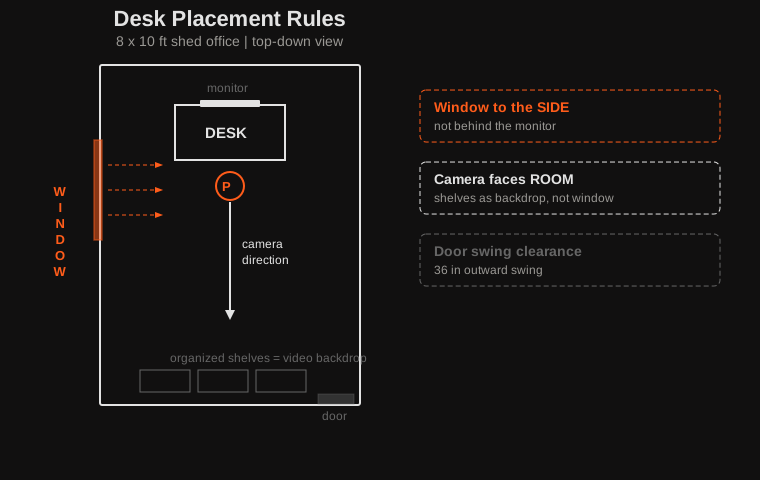
Placement Diagram
Desk placement rule: window to the side, not behind or in front of the monitor. Camera (laptop or webcam) faces toward the room — the background on video calls should be the interior, not the window.
Window and light direction:
Window to the side of the monitor, not behind it (backlit screen) or in front of it (glare on screen)
Left-side window preferred for right-handed workers — reduces shadow on writing
If the shed has only one window and it faces the monitor direction: use blackout blinds + artificial task light (4,000K LED at 45 degrees)
Video call backdrop:
The camera position determines what the background looks like on calls
In a small shed, the cleanest backdrop is a wall with shelving — organised shelves communicate "professional workspace"
Avoid positioning the desk so the camera shows the door, HVAC unit, or a cluttered wall
Door swing clearance:
Measure the door swing arc before placing any furniture near the entry
In an 8×10 shed, the door is often the narrowest dimension — a standard 36-inch outward-swinging door clears most of the entry wall
Use the AI Garage Designer to generate a custom layout plan for your shed office — desk placement, zone configuration, and storage recommendations for your specific shed dimensions.
Planning Tool
Estimate your shed office cost
Calculate conversion costs, compare against co-working, and see how many months until your shed office pays for itself.
Mechanical Engineer · 10+ years construction & fabrication
Founder of The Tool Scout. Every recommendation on this site is based on hands-on experience building workshops, garages, and fabrication spaces — not spec sheets.