
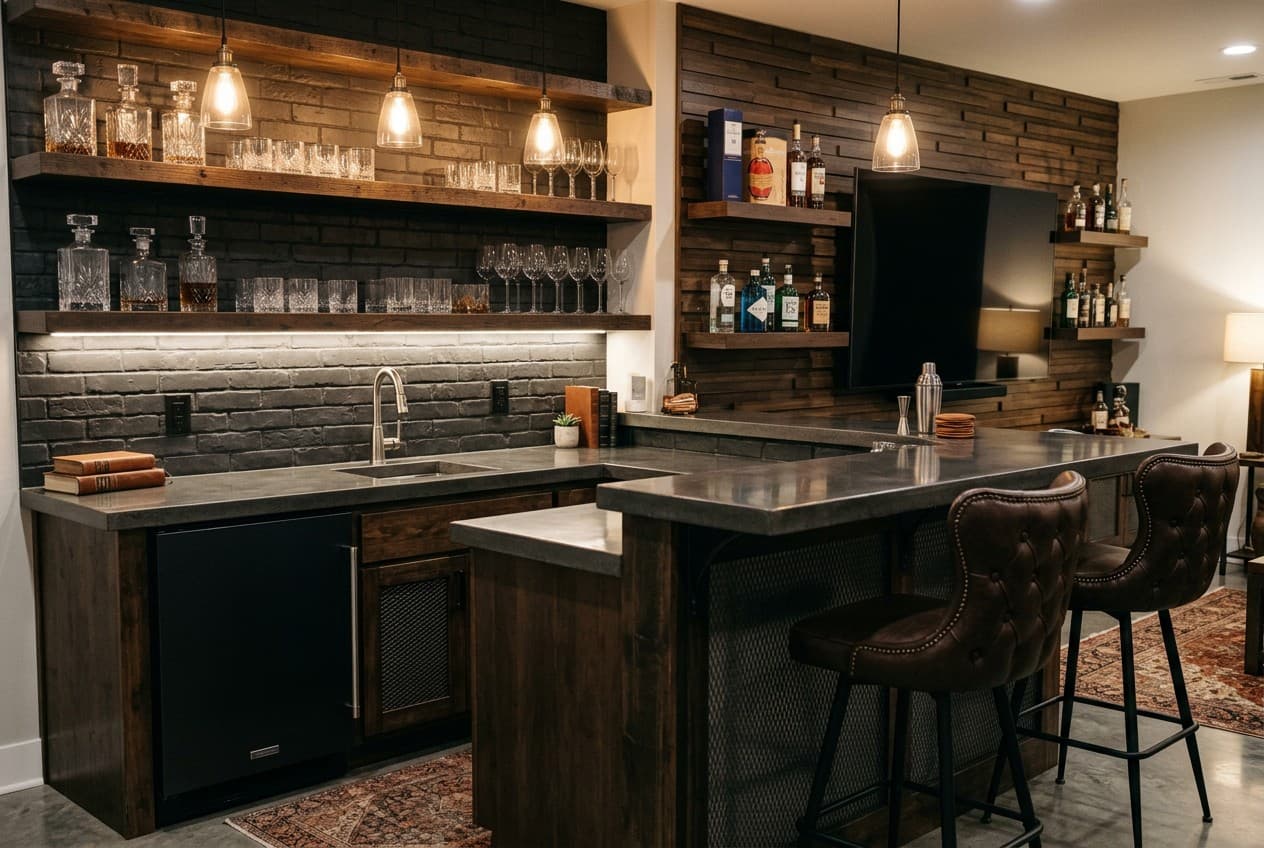
The Bar Is What Separates a Man Cave from a Room With a TV
You can have a great TV, comfortable seating, and a good sound system — and the space still feels like a living room extension rather than a dedicated retreat. The bar changes that. It's the single element that signals this is a purposeful space designed for enjoyment rather than utility.
The bar doesn't have to be elaborate. A bar cart, a mini fridge, and a dedicated corner position is enough to create the psychological effect. What matters is that the bar zone is intentional — not an afterthought pushed against whatever wall had space.
This guide covers bar setups from the simplest cart to a full wet bar build, with layouts, cost tiers, and what each option actually requires.
Bar Zone Layouts
1-Car Garage Bar Layout
In a 1-car garage man cave, the bar needs to be efficient. A built-in bar on the entry side of the garage (near the door) keeps it accessible without crossing through the seating zone.
1-Car Garage Man Cave — Bar Zone
Total: 240 sq ft total2-Car Garage Bar Layout
A 2-car garage gives enough room for a proper built-in bar with stools.
2-Car Garage Man Cave — Bar Zone
Total: 440 sq ft totalBar Setup Options — From Simple to Full Build
Option 1: Bar Cart (No Build Required)
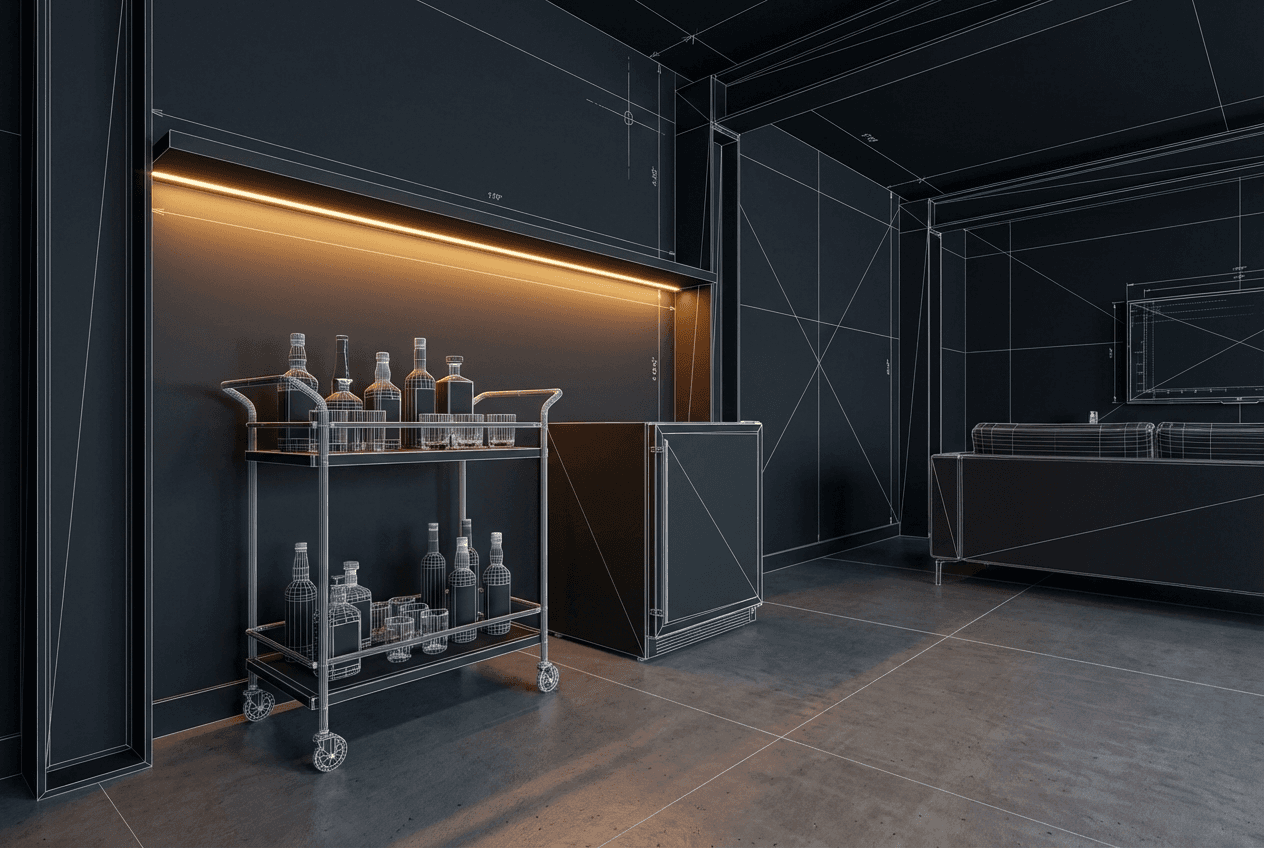
The simplest and most flexible option. A quality bar cart ($150–$400) with a mini fridge beside it is a functional bar setup in any space.
What you get: a dedicated drink preparation area, bottle and glass storage, and the visual signal that this is a bar zone. What you give up: counter space (bar carts are narrow), bar stool seating (no counter height to sit at), and permanence.
Best for: 1-car garages, temporary setups, and spaces where you want to try the layout before committing.
Option 2: Freestanding Bar Cabinet
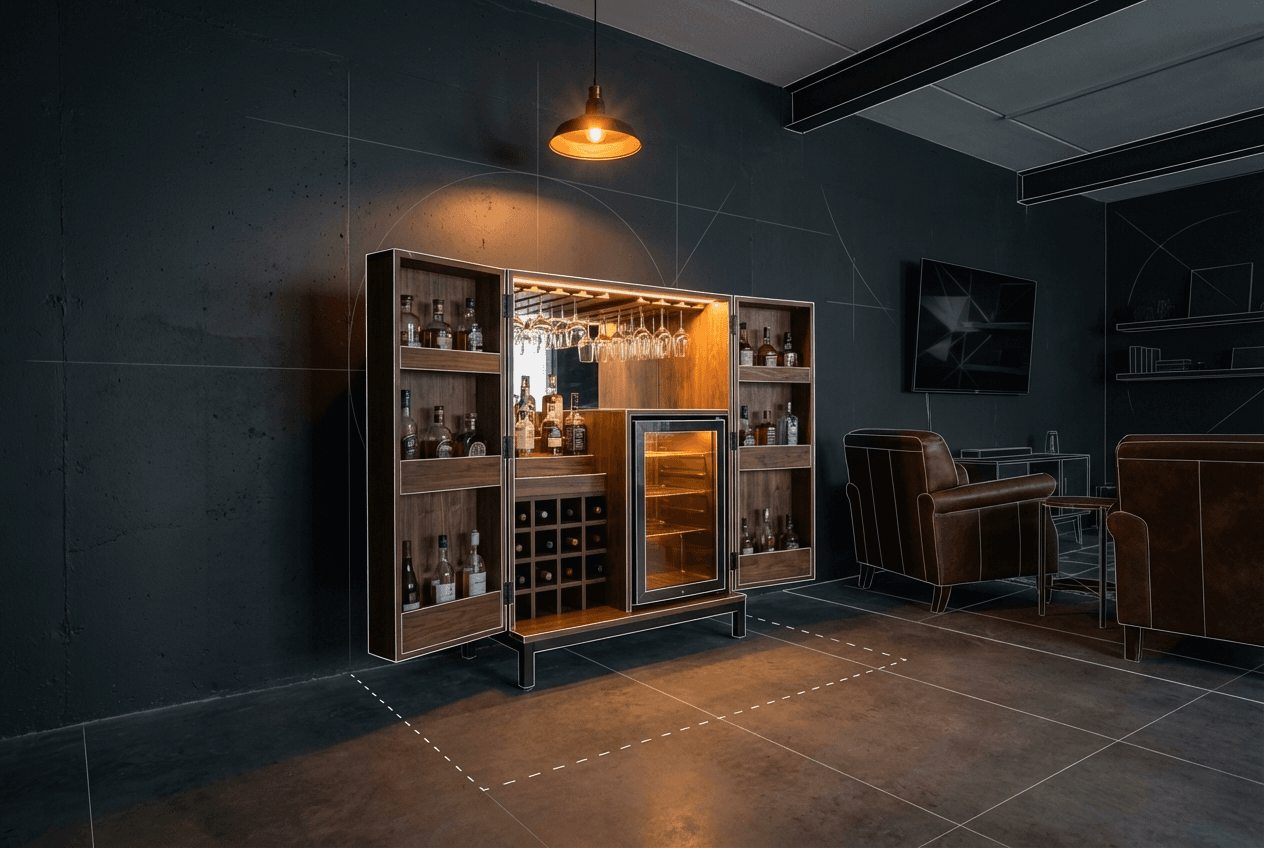
A bar cabinet ($300–$800) is a step up — it has a proper counter surface, wine and bottle storage, glass storage, and sometimes an integrated mini fridge. No building required, moves if needed.
What you get: a proper self-contained bar with storage. Better looking than a cart. What you give up: seating (no overhang for stools), permanent integration with the room.
Option 3: Counter + Keg/Fridge (DIY Build)
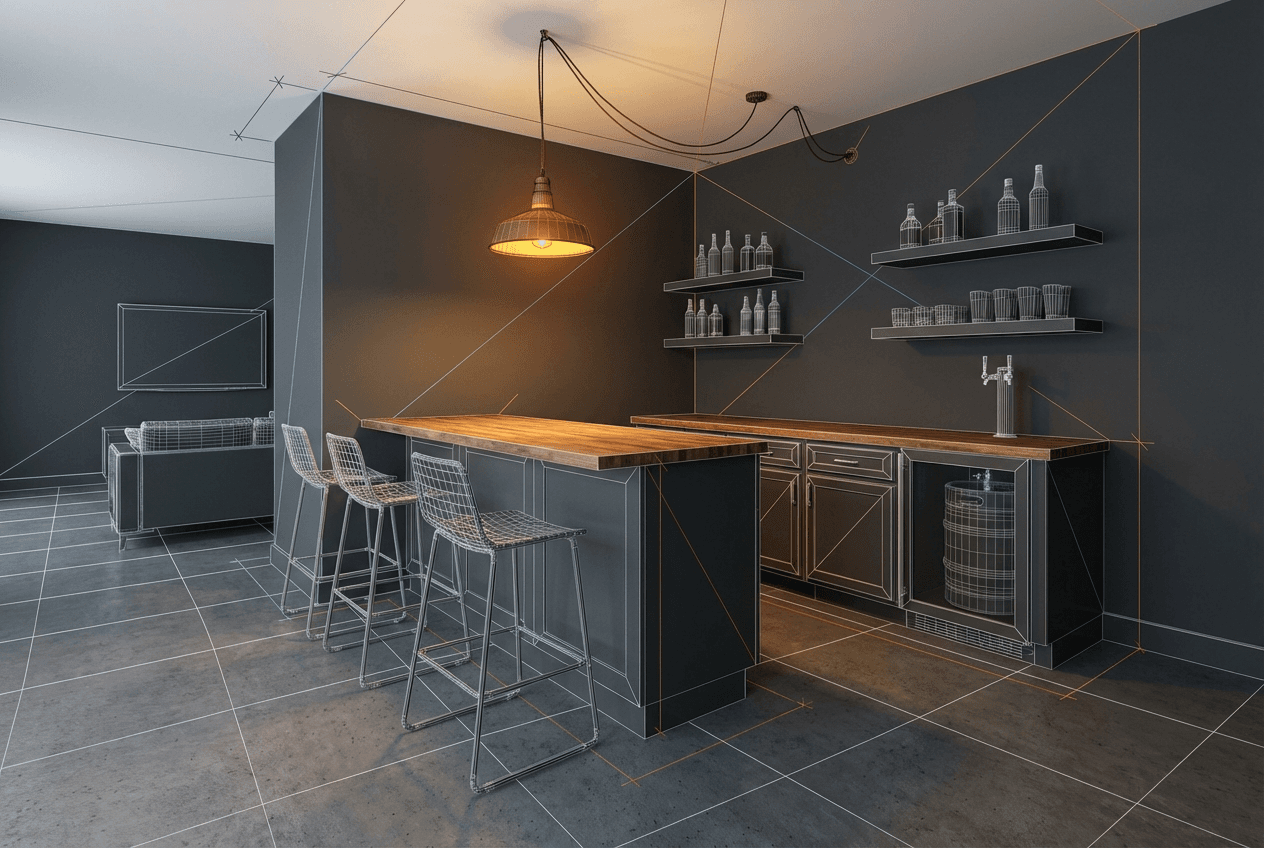
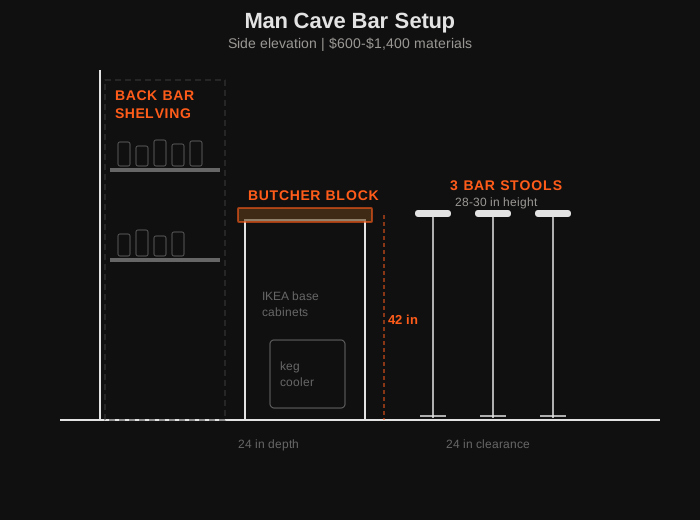
A counter-height (42 in) built bar using IKEA kitchen base cabinets (SEKTION or METOD) + butcher block or laminate counter is the most cost-effective proper bar. Add bar stools, mount shelving above for bottles, and install a mini fridge or keg cooler below.
Cost: $600–$1,400 depending on finish quality and fridge type.
What you get: seating at the bar, dedicated storage, a professional-looking result at manageable cost. This is the setup in most well-executed mid-range man caves.
Option 4: Full Wet Bar (with Plumbing)
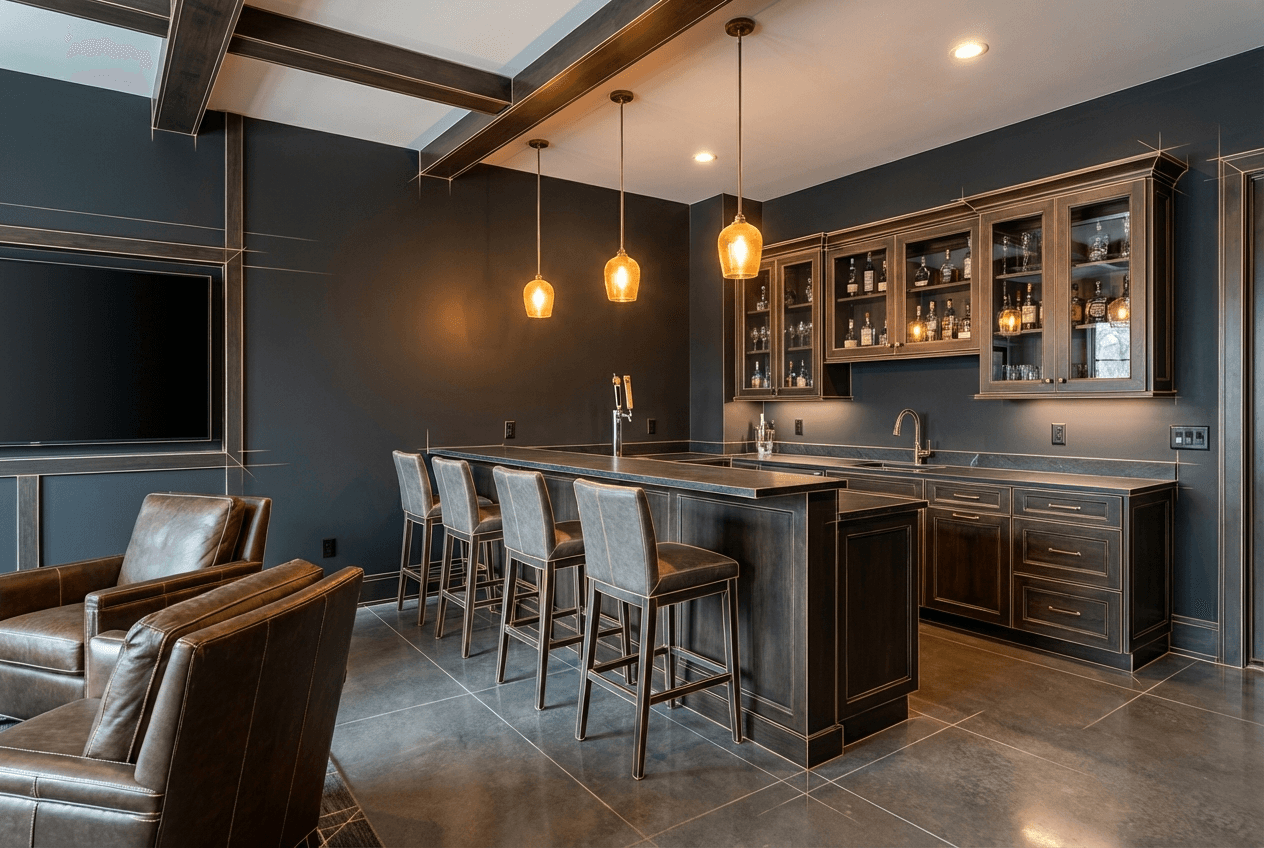
A full wet bar with a bar sink, running water, and dedicated drain requires a licensed plumber and permits in most jurisdictions. The convenience is significant — ice rinsing, glass washing, and cleanup without leaving the space.
Cost: $2,000–$6,000 for plumbing rough-in + bar installation. Requires a water line and drain routed to the garage — substantial if the garage is detached.
Skip the wet bar if: the garage is detached from the house without easy plumbing access, or if the budget doesn't clearly support it. A keg cooler or ice bucket in a dry bar performs 90% of the functional role of a wet bar at a fraction of the cost.
Budget Tiers
Man Cave Bar Budget Tiers
- Quality bar cart — $150–$350
- Mini fridge (1.7–3.2 cu ft) — $80–$200
- Barware starter set (glasses, shaker, tools) — $60–$120
- LED strip accent light above — $20–$40
- IKEA base cabinets + counter — $400–$700
- Keg cooler or undercounter fridge — $200–$500
- Back bar shelving (floating shelves) — $60–$150
- Bar stools × 3 — $150–$400
- Bar pendant light — $80–$200
- Custom cabinetry or high-end modular units — $800–$2,500
- Bar sink + plumbing rough-in — $1,000–$3,000
- Keg system or dual-zone wine fridge — $400–$1,200
- Stone or premium bar counter — $400–$1,000
- Full lighting package — $200–$500
Bar Configuration Details
Counter Height
Bar counters are 42 inches high (vs standard kitchen counter at 36 inches). Bar stools are 28–30 inches high to match. If you use standard kitchen cabinets as the base, you'll need to raise them (legs or a platform) or add a custom-height counter frame.
Back Bar Shelving
The most visually impactful element of any bar. Floating shelves with a mix of bottle heights, glassware, and accent items (neon sign, sports memorabilia) creates the bar aesthetic. Mount at 48–54 inches above the floor on the wall behind the bar counter.
Under-Counter Options
- Mini fridge (1.7–3.2 cu ft): adequate for 1–2 people using the bar. $80–$200.
- Undercounter beverage fridge: dedicated can/bottle storage with glass door. $200–$500. Looks better than a mini fridge.
- Keg cooler (single or dual tap): $300–$800. The statement piece that elevates any bar from "drinks corner" to "real bar." Requires CO₂ supply and occasional keg delivery.
See also: Basement Bar Ideas for basement-specific layouts and Shed With a Bar for outdoor bar builds.
Frequently Asked Questions
Does a man cave bar need a real bar counter or can I use a regular table?
A bar-height counter (42 in) with stools is significantly better than a regular table height (30 in) for a standing/social bar experience. That said, a regular dining table can work as a "bar" for casual setups — the distinction is mostly psychological and aesthetic. If you're committing to the bar as a focal feature, use the correct height.
What's the minimum space for a bar setup with seating?
Allow 24 inches of counter width per bar stool, plus 24 inches of stool clearance behind each seat (so someone can stand). For 3 stools: minimum 6 ft of counter front + 2 ft depth for the counter + stools = about 8×5 ft total zone.
Can I add a keg system to a garage bar?
Yes. A kegerator runs on a standard household outlet (110V, about 100W). In a garage, you'll need the refrigeration unit to handle the ambient temperature — in very hot garages in summer, the fridge has to work harder. Many kegerators are rated for ambient temperatures up to 90–95°F. Insulating the garage (if not already done) extends the kegerator's usable season significantly.
Related Guides
- Garage Man Cave Ideas — full man cave layouts including the bar zone
- Man Cave Lighting Ideas — bar pendant and accent lighting
- Basement Bar Ideas — basement-specific bar setups
- Shed With a Bar — outdoor/shed bar builds
- Man Cave Hub: Complete Guide — the full planning resource
Use the AI Garage Designer to plan your man cave layout including the bar zone — seating orientation, bar placement, and product recommendations for your specific space.
If you're building the bar in a shed rather than a garage, the shed with a bar guide covers the structural, electrical, and layout considerations specific to outbuilding bar builds — including how to handle the tighter footprints that most sheds present.