
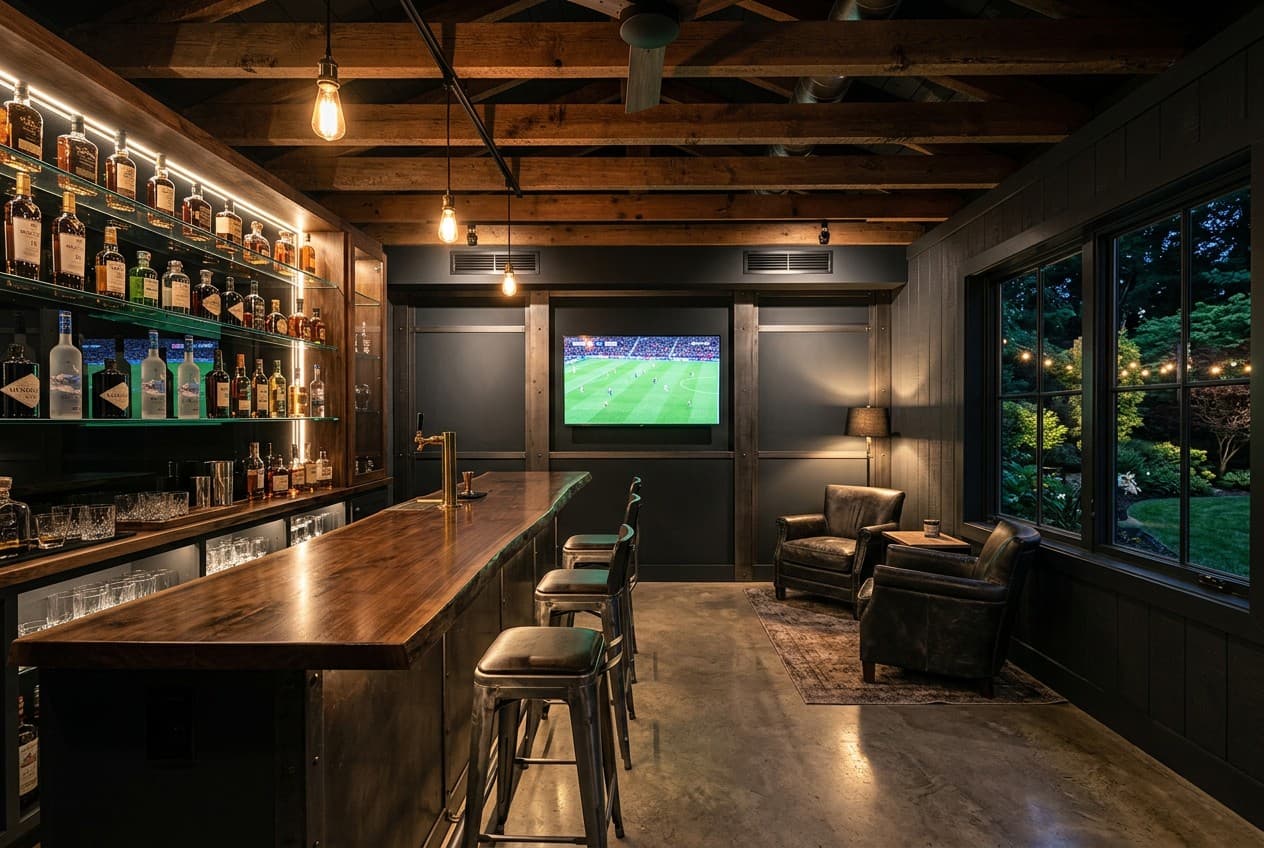
A shed bar is the ultimate backyard project. It's completely separate from the house, which means the noise stays outside, the mess stays outside, and the space is infinitely customisable without touching anything inside. You're not carving a corner out of a finished basement — you're building a dedicated venue. The two variables that determine everything else are shed size and climate control. For a workable bar space with room for a few guests and a proper bar run, you need a minimum of 10×12 (120 sq ft). A 10×14 is more comfortable. At 12×20 or larger, you're building a full pub.
Climate control is the second decision to make early. An uninsulated shed is a seasonal bar — usable in spring and fall, borderline in summer, and unusable in winter in most climates. If you want year-round use, insulation and a heat source (mini-split, electric wall heater, or propane) are non-negotiable. The good news is that a shed is a much simpler structure to insulate than a basement — stud walls, no moisture issues from ground contact, and a straightforward ceiling to seal.
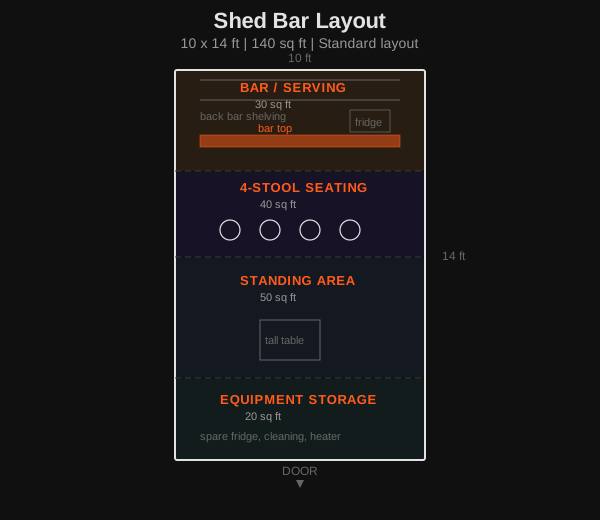
Standard Shed Bar Layout (10×14)
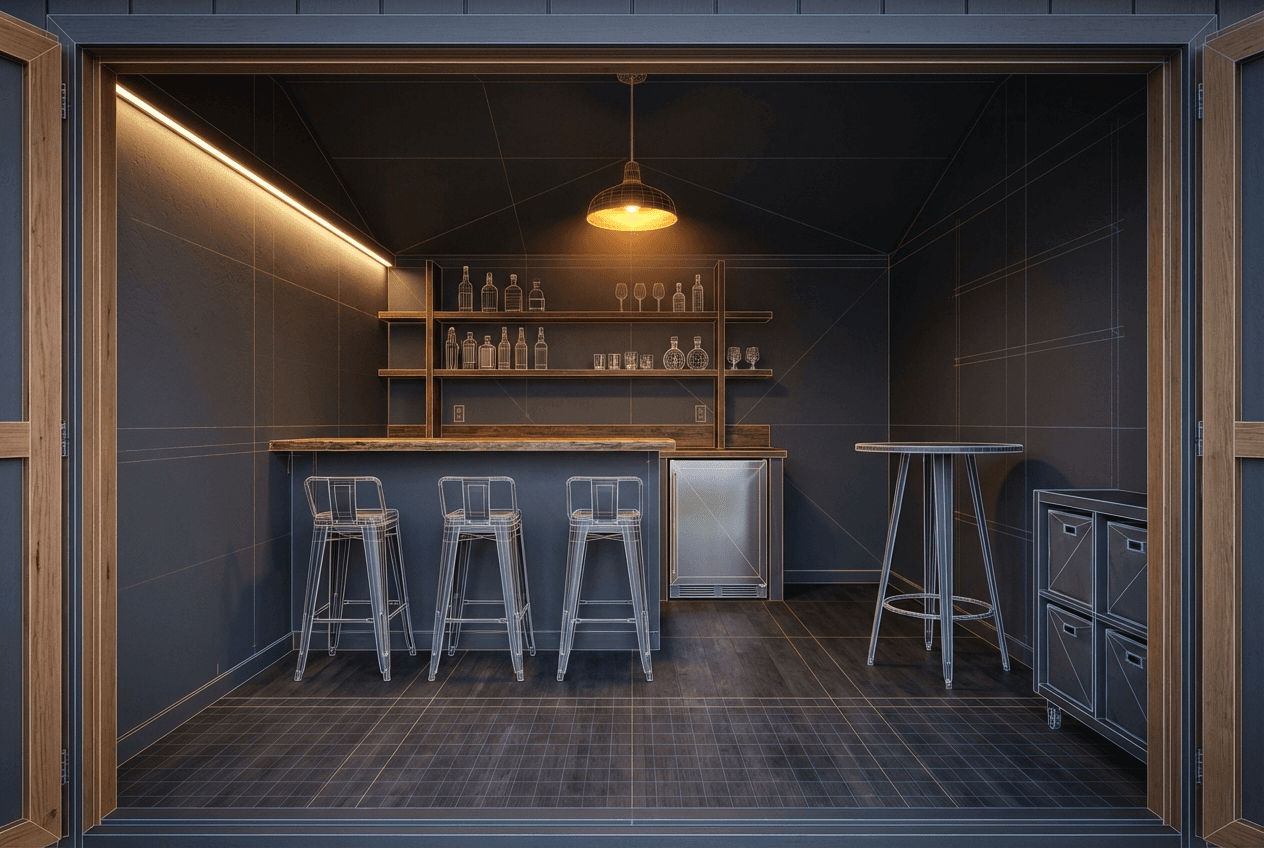
A 10×14 shed gives you 140 sq ft to work with — enough for a real bar run, four stools, and a standing zone behind. The bar typically runs along the back wall or one of the long side walls, keeping the entry clear. This is the most common shed bar footprint and the one that works in most suburban backyards.
Standard Shed Bar — 10×14 Layout
Total: 140 sq ft (10×14 shed)Large Shed Bar Layout (12×20)
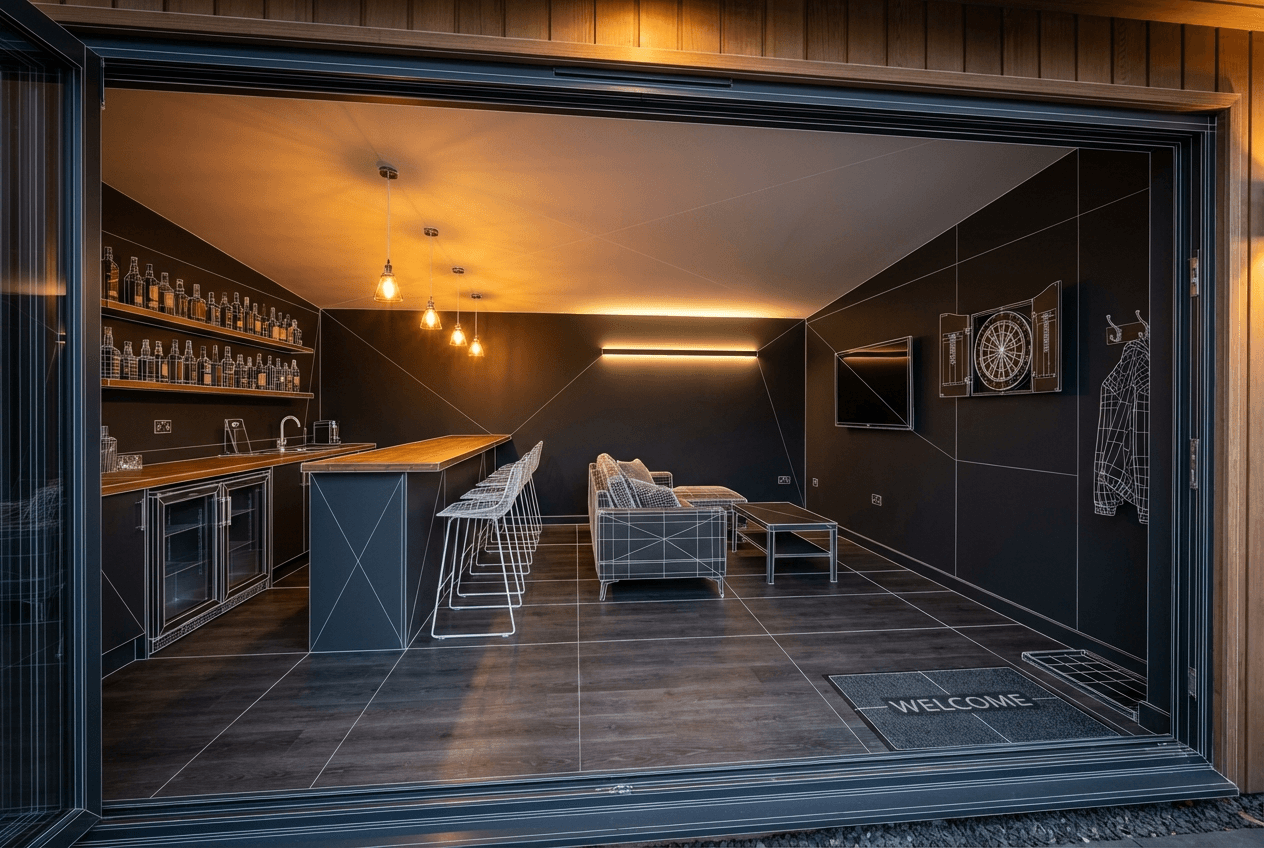
A 12×20 shed opens up a fundamentally different category of build. At 240 sq ft, you can include a full bar with back bar shelving, a lounge seating zone, a TV wall, and a proper entry area. This is a pub-level build — the kind of space guests ask to spend time in rather than just visit once. The bar typically runs along one of the 20-foot walls, with lounge seating filling the centre and rear.
Large Shed Bar — 12×20 Layout
Total: 240 sq ft (12×20 shed)Budget Tiers
Shed bar costs split into two categories: the structure itself and the bar build-out inside. If you're converting an existing shed, your build-out cost is the dominant variable. If you're buying or building a new shed, add $1,500–$5,000+ for the structure before you touch the interior.
Shed Bar Build Budget Tiers
- Existing shed converted — no new structure cost
- Freestanding bar cart or plywood bar top on sawhorses
- Mini fridge ($150–$300) + basic lighting
- Trade-off: no insulation, seasonal use only
- New 10×14 shed kit or existing shed with full interior build-out
- Built-in bar frame, butcher block top, under-counter fridge
- Basic insulation (batts + vapour barrier) + electric wall heater
- What this unlocks: year-round use, permanent bar fixture
- Custom pub-style build in 12×20 or larger shed
- Full insulation + mini-split for heating and cooling
- Custom cabinetry, granite or quartz bar top, plumbing
- What this achieves: pub-quality backyard venue
Standard 10×14 Layout Reference
The Two Things That Make or Break a Shed Bar
Insulation is the single most important factor for year-round usability. A shed with no insulation becomes unusable in winter in most of the US and Canada, and uncomfortably hot in summer in warmer climates. The standard approach for a stud-framed shed is R-13 fiberglass batts in the walls, R-19 in the ceiling, and a continuous vapour barrier before you close up with OSB or drywall. If you're converting an existing shed, check whether the wall cavities are accessible — if the walls are already sheathed inside, you may need to use rigid foam on the interior face instead. Budget $400–$900 for materials on a 10×14 shed if you're doing the work yourself.
A dedicated electrical circuit is not optional once you start running bar equipment. A bar fridge draws 100–200W continuously. Add a second fridge, overhead lighting, a TV, and a portable heater, and you're at 1,500–2,000W without trying. Running that load through an extension cord from your house is a fire risk and a constant nuisance. The correct solution is to run a dedicated 20-amp circuit (or two) from your main panel to the shed, with a sub-panel or disconnect in the shed itself. Budget $500–$1,500 for an electrician to run an underground feed, depending on distance from panel to shed. Do this before you finish the interior walls — running conduit through finished walls costs more and looks worse.
What to Do Next
Whether you're converting an existing shed or starting from scratch, the layout decision comes first. Map your shed dimensions against the zone configurations above before you buy any materials — the bar run position determines where your electrical outlets land, and those need to be roughed in before insulation goes up.
Design your shed bar in the Garage Designer to lay out your bar run, seating zones, and equipment positions against your actual shed footprint.
For more man cave build guides, see the man cave hub.
If you're also considering a finished basement as a location, the basement bar ideas guide covers corner, back-wall, and L-shape configurations with plumbing decisions that apply whether the space is below grade or in a detached structure. For detailed guidance on bar top materials, finish options, and the pipe-and-lumber frame that works equally well in a shed, see the man cave bar ideas guide.