
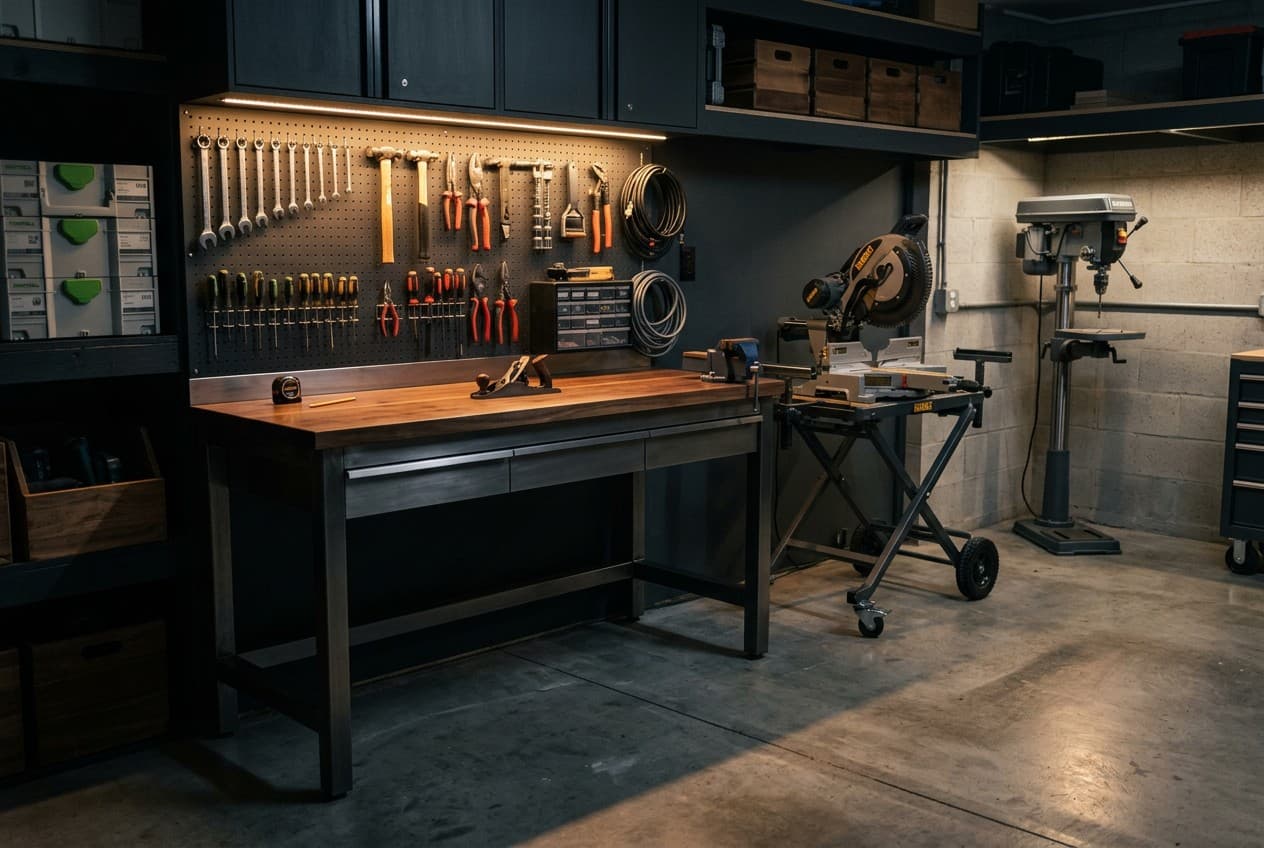
Which Type of Workbench Do You Actually Need?
The "best workbench" question is the wrong question. The right question is: what is this bench for, and how much space do you have?
A budget builder who does occasional repairs needs a different bench than a serious woodworker who planes boards by hand. A metalworker needs something entirely different again. The benchmaker industry obscures this by presenting every option as a general-purpose solution — which almost none of them are.
There are four workbench types that cover the vast majority of small garage workshop needs. This guide matches them to the situations where they actually make sense.
Find Your Scenario
Which Workbench Fits Your Workshop?
Feature Comparison
| Bench Type | Price RangeRecommended | Weight Capacity | Vise Included | Footprint | Best For |
|---|---|---|---|---|---|
| Folding / Portable | $60–$200 | 300–500 lb | No (clamping surface only) | Folds to 4 in depth | Shared garages, light use |
| Steel Frame + MDF/Wood Top | $150–$350 | 1,000–2,000 lb | Sometimes | 5–6 ft × 24 in typical | General shop, budget builders |
| Woodworking Bench (Kit) | $500–$1,500 | 1,500–3,000 lb | Yes (leg vise + tail vise) | 6–8 ft × 24–30 in | Hand tool woodworking |
| Custom Wood Build | $300–$800 materials | 2,000+ lb | DIY vise installation | Any size | Experienced woodworkers |
| Steel Welding Table | $400–$2,000+ | 3,000–6,000 lb | No (clamp-to-surface) | 4–5 ft × 30–40 in | Metalwork, fabrication |
What to Look for in a Small Garage Context
Height
Standard workbench height is 34–36 inches for standing work. If you're tall (6'2"+), go higher (38–40 in). If you do a lot of heavy clamping or work that requires downward force, go lower (32–34 in) for better leverage.
Wall-mounted fold-down benches can be set at any height during installation — this is the one advantage they have over free-standing benches.
Top Material
- Hardwood (maple, beech): best for woodworking. Resists tool damage, clamps to surface easily, repairable
- MDF: cheap, flat, and smooth — good as a secondary surface but dents and swells with moisture
- Plywood: tougher than MDF, slightly less flat. Good budget worktop for general use
- Steel plate: for metalworking only. Heavy, durable, unaffected by heat and sparks
Vise
A vise is not optional if you do hand tool woodworking. For power tool work and general DIY, you can often substitute with clamps and bench dogs.
A cheap vise is worse than no vise — it racks under pressure and slips during use. If you buy a woodworking bench, buy a vise rated at 350 lb clamping force minimum. The Veritas quick-release vise ($200–$350) is the benchmark for a reason.
Storage Below
Built-in drawers and shelves under the bench are convenient but expensive. For most small garages, a rolling tool chest parked under or beside the bench provides better storage flexibility at lower cost.
Budget Breakdown
What Your Workbench Budget Gets You
- Steel-frame bench with hardboard or MDF top
- No vise (add separately — $60–$150)
- Basic lower shelf for storage
- Works well for general DIY and light workshop use
- Solid hardwood or quality plywood top
- Basic face vise included or easily added
- More robust frame (won't flex during heavy clamping)
- Suitable for serious power tool woodworking
- Full woodworking bench: twin-screw face vise + tail vise
- Solid hardwood (maple or beech) top — 3–4 inch thick
- Dog holes for holdfasts and bench dogs
- Built for a lifetime of hand tool and power tool use
Building vs Buying
For a general-purpose bench, buying a welded steel frame bench and attaching a quality top is usually the better value — it's faster, often cheaper than buying lumber, and produces a more consistent result.
For a woodworking bench, building your own is still the standard path for most serious woodworkers — not because it's cheaper (it usually isn't), but because it lets you specify the exact dimensions, wood species, and vise placement for your height and working style. A well-built hardwood bench lasts 40–60 years with maintenance.
If you're in the middle — you do woodworking but don't want to spend a month building a bench — buy a Sjobergs or similar kit bench. You'll have a real bench in a day.
Related Guides
- Small Garage Workshop Layout Ideas — plan your shop before buying equipment
- Workshop Setup Hub: Complete Guide — the full planning resource
- Workshop Hand Tools Guide — what goes on your new bench
- Workshop Saws Guide — the other big shop decision
Use the AI Garage Designer to plan your workshop layout — including workbench placement, clearances, and wall storage configuration.